
Understanding Fallen Angels: Bond Downgrades Explained
A fallen angel is a bond that was rated investment-grade but has since been downgraded to junk status due to the declining financial position of its issuer. The bond is downgraded by one or more of the big three rating servicesRating AgencyA rating agency assesses the financial strength of companies and government entities, especially their ability to meet principal and interest payments – Fitch, Moody’s and Standard & Poor’s (S&P). A bond downgrade may occur when the bond issuerBond IssuersThere are different types of bond issuers. These bond issuers create bonds to borrow funds from bondholders, to be repaid at maturity. experiences declining revenues or other financial problems. The chances of a bond being downgraded increase when an entity’s debt levelsDebt CapacityDebt capacity refers to the total amount of debt a business can incur and repay according to the terms of the debt agreement. are rising while the revenues are dropping consistently.
Although the downgrade may be viewed as a negative, fallen angels are attractive to contrarian investors who want to capitalize on the entity’s ability to recover. They are considered higher-quality bonds than the average high yield bonds, as they have the potential of bouncing back to investment grade. Fallen angel issuers are usually larger, more mature companies with well-known brand names. Thus, they usually have the resources to help them bounce back to investment grade.

Characteristics of a Fallen Angel
Fallen angels average higher price volatility. Before an anticipated downgrade, they are usually sold off by the market in bulk. After the downgrade, prices often increase as many investors rush to buy these bonds for speculative purposes. Investors have hopes of earning high returns once the firm recovers from financial distress.
Fallen angels average higher credit quality as compared to other junk bonds and original-issue junk bond indexes. About 75% of the bonds in the fallen angel category are BB-rated and, therefore, have a lower credit risk. The average 12-month default rate for fallen angels is 3.51%. This compares favorably to 4.51% of original-issue high yield bonds and 4.22% for high yield bonds overall.
Angel Recoveries from a Fall
The following circumstances most commonly lead to successful recoveries of fallen angels:
1. Changes in Business Segments
An entity may receive a downgrade in its credit rating due to the underperforming of specific segments of its business. For example, in the case of Nokia, the telecom equipment business segment generated higher revenues than the handheld devices segment. With the introduction of more sophisticated mobile devices by competitors such as Apple and Microsoft, Nokia was unable to generate adequate revenues from its handheld devices business. After selling the handheld devices segment to Microsoft, Nokia was able to focus on improving the telecom equipment segment to generate more revenues.
2. Expenditure Reduction
The most common recovery strategy for a struggling company is to implement cost reduction measures. Cost reduction may involve limiting expenditures on resources, laying off personnel, or reducing benefits. A company may limit resource expenditures by successfully negotiating lower costs from suppliers. It may also terminate the services of some employees whose services are less critical in the production process. Automating some of the production processes can help in reducing the number of employees attached to these departments. A firm can also slash benefits such as pension or healthcare obligations until it undergoes full recovery.
3. Changes in Capital Deployment
A company can make changes in capital deployment by reducing the capital allocated to underperforming segments and increasing capital allocations to well-performing segments. This strategy aims to reduce capital allocations to less profitable areas and use the capital more efficiently. American International Group (AIG) implemented this strategy to remain afloat after the 2008 financial crisis. The company improved capital allocation to the most productive business segments to boost its revenue base. It also disposed of some of its assets to raise additional capital. AIG used the funds to pay back government bailout money that it had received.
Fallen Angels vs. Rising Star Bonds
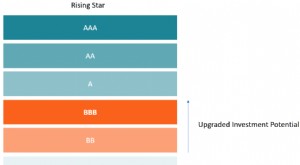
Fallen angels are bonds that were previously investment grade but have since been downgraded to junk bond status due to the decline in the issuer’s credit rating. On the other hand, rising stars are those bonds that were previously considered to be speculation grade, but have grown their revenues over time. They are close to the level of investment grade bonds and considered to have a reduced risk of default. Most rising star bonds are issued by relatively new businesses that do not have a history of debt repayment that rating agencies can use to assess them.
Investors may gain from investing in fallen angel bonds by purchasing them just before or after they are downgraded, when prices for such bonds are likely to be lowest. A fallen angel’s recovery tends to drive up prices as the demand for the bond increases. When investing in rising star bonds, investors must identify a bond at the right time of the market cycle when prices are relatively low. If the bond gets an improvement in credit rating, it is a sign that the issuer is more likely to meet its debt obligations. Once the rising star moves to an investment grade bond, the issuer can access funding from a larger pool of investors who shy away from junk bonds.
More Resources
Thank you for reading CFI’s explanation of a fallen angel. CFI is the official provider of the global Financial Modeling & Valuation Analyst (FMVA)™Become a Certified Financial Modeling & Valuation Analyst (FMVA)®CFI's Financial Modeling and Valuation Analyst (FMVA)® certification will help you gain the confidence you need in your finance career. Enroll today! certification program, designed to help anyone become a world-class financial analyst. To keep learning and advancing your career, the additional resources below will be useful:
- Bond PricingBond PricingBond pricing is the science of calculating a bond's issue price based on the coupon, par value, yield and term to maturity. Bond pricing allows investors
- Fixed Income TradingFixed Income TradingFixed income trading involves investing in bonds or other debt security instruments. Fixed income securities have several unique attributes and factors that
- Debt Capital MarketsDebt Capital Markets (DCM)Debt Capital Markets (DCM) groups are responsible for providing advice directly to corporate issuers on the raising of debt for acquisitions, refinancing of existing debt, or restructuring of existing debt. These teams operate in a rapidly moving environment and work closely with an advisory partner
- Market Value of DebtMarket Value of DebtThe Market Value of Debt refers to the market price investors would be willing to buy a company's debt at, which differs from the book value on the balance sheet.
-

Mortgage Bonds: Understanding Real Estate-Backed Investments
What are mortgage bonds? A mortgage bond is a bond in which holders have a claim on the real estate assets put up as its collateral. A lender might sell a collection of mortg
-

Angel Investors: Funding & Mentorship for Startups
An angel investor is a person who provides their own personal funds to entrepreneurs in the early stage of a start-up business. Angel investors usually have a business background and most are ac
invest
- Baby Bonds: A Comprehensive Guide to Investing in Children's Futures
- Understanding Bonds: A Comprehensive Guide for Investors
- Callable Bonds: Understanding Issuer Redemption Rights
- Convertible Bonds: A Comprehensive Guide for Investors
- Green Bonds: Financing a Sustainable Future | [Your Company Name]
- High-Yield Bonds: Understanding Risk & Potential Returns
- Investment-Grade Bonds: Understanding Credit Risk & Ratings
- Understanding Junk Bonds: Risks, Rewards, and Investment Strategies
- Understanding Bonds: A Comprehensive Guide for Investors
-
 Understanding Rising Star Companies in Debt Capital Markets
A Rising Star is a business or a company that is relatively new to the debt capital markets, with little or no history of debt repaymentDebt ScheduleA debt schedule lays out all of the debt a business...
-
 Sovereign Bonds: A Comprehensive Guide to National Debt
A sovereign bond is a national government-issued debt securityDebt SecurityA debt security is any debt that can be bought or sold between parties in the market prior to maturity. Its structure represe...