
Understanding Horizontal Channels in Trading: A Comprehensive Guide
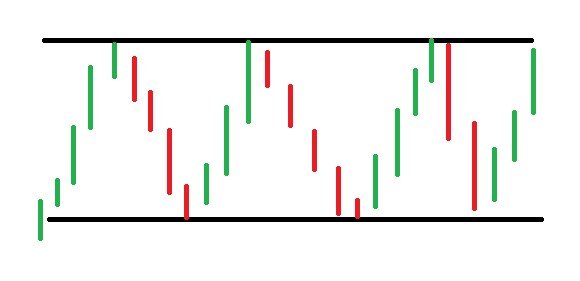
A horizontal channel is a trend line that connects the variable pivot highs and lows to highlight the price movements during a trading period. Otherwise known as a sideway trend or price range, horizontal lines are used by traders for identify breakouts to determine where price action is decisive. Channels are forms of vertical support and resistance in which price faces trouble either rising above or sinking below.
Summary
- A horizontal channel is a trend line in a trading range, also known as a sideways trend.
- It reveals precise price points to investors that can systematically guide investors on when to enter or exit a trading position.
- In charts, a horizontal channel’s top trend line becomes the resistance line, while the bottom line becomes the support line to help in the analysis.
Understanding Horizontal Channels
A horizontal channel is a sideways trend with a rectangular pattern. By definition, a horizontal channel consists of four contact points because it needs at least two lows and two highs. It requires equal buying and selling pressure with a sideways price action direction.
A horizontal channel’s trends breakout occurs during price consolidation, a period when the trade is limited within specific price ranges and is characterized by few trading opportunities. The resistance (pivot low) and the support (pivot high) frame out the price movement in a trading sessionTrading SessionA trading session refers to the trading hours of an asset or a given locale. Usually, different markets have different trading hours, and a.
The passing trend lines on pivots show a visual picture of prices in action. The paths enable the trader to see the gradual fall or rise of price over time. A new high and a new low represent a buy signal in the price above the horizontal channel and a sell signal in the price below the horizontal channel, respectively.
Locating a Horizontal Channel in a Graph
A horizontal channel is a common chart pattern in every trading period. The opposing forces of buying and selling are similar until a breakdown occurs. Although a horizontal channel is a powerful trend indicator, it is often overlooked.
It’s a high frequency pattern based on technical analysis elements which enable traders to make trading decisions when the odds are in their favor. There are three ways traders can use to locate horizontal channels in a graph.
- Traders can locate the channel manually by looking through charts.
- Traders can utilize stock screeners that recognize horizontal channels.
- Traders can subscribe to service providers who compile chart patterns daily.
Apart from the horizontal channel, there are two other channels – ascending and descending channels.
1. Ascending Channel Trading Pattern
The ascending channel trading pattern is also called a bullish price channel and is a continuation with a positive slope. The sloping parallel lines contain the price actions and show a clearly defined uptrend. Traders can keep opening long positionsLong and Short PositionsIn investing, long and short positions represent directional bets by investors that a security will either go up (when long) or down (when short). In the trading of assets, an investor can take two types of positions: long and short. An investor can either buy an asset (going long), or sell it (going short). as long as the stocks’ price remains within the upper and lower channels’ trend line.
2. Descending Channel Trading Pattern
The descending channel trading pattern is also referred to as a bearish price channel trading pattern. The bear market continues as long as the stocks’ price actions follow the down-trending channel’s trend lines. However, a pattern ends when there is a breakout on the resistance line that makes a new high.
Using Support and Resistance to Analyze a Horizontal Channel
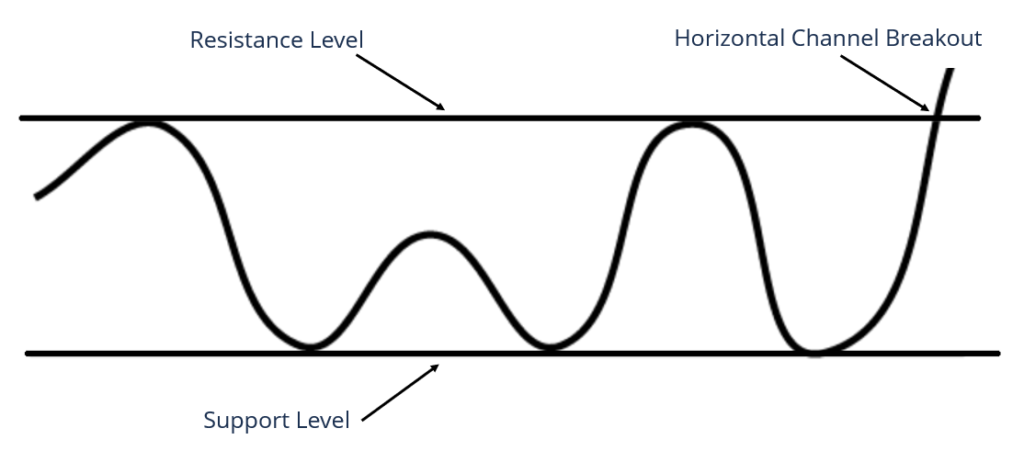
Trend channels utilize parallel trend lines. In chart analysis, the top channel’s trend line becomes a potential resistance level, while the bottom trend line becomes the support level. Technical investors use support and resistance levels as one of the main areas of focus in chart analysis.
The advantage of using a horizontal channel is that it quickly reveals trading exit and enter points to an investor. Thus, the support and resistance points in a horizontal channel are closely monitored. A horizontal channel can be created using technical analysis indicators that smooth out price action, such as trend lines, moving averagesMoving AverageA moving average is a technical indicator that market analysts and investors may use to determine the direction of a trend. It sums up the data points, or Fibonacci retracement levels.
Traders use the buy and sell points within a horizontal channel as a guide to clear and systematic trading. Investors should observe the following rules for entering long and short positions:
- Sell or take a short position when the stocks’ price reaches the top of a channel’s trend line.
- Hold onto current trade and do nothing when the stocks’ price movement is within the middle of the channel’s trend lines.
- Take a long position when the price of stocks reaches the bottom of the trend line.
Special Considerations
A horizontal channel information is strengthened when candlestick signal information is incorporated. Price movements that occur at the support and resistance levels enhance the predictive value of a horizontal channel.
A horizontal channel also becomes a useful tool for investors when finding a new investment target. It may indicate how worthwhile the next trading period will be in addition to showing investor sentiment by looking at the past trading range.
Additional Resources
CFI is the official provider of the Capital Markets & Securities Analyst (CMSA)™ Program Page - CMSAEnroll in CFI's CMSA® program and become a certified Capital Markets &Securities Analyst. Advance your career with our certification programs and courses.certification program, designed to transform anyone into a world-class financial analyst.
In order to help you become a world-class financial analyst and advance your career to your fullest potential, these additional resources will be very helpful:
- Advanced Technical AnalysisAdvanced Technical AnalysisAdvanced technical analysis usually involves using either multiple technical indicators or a rather sophisticated (i.e., complex) indicator. "Sophisticated"
- Donchian ChannelsDonchian ChannelsDonchian Channels are a channel-based technical analysis trading strategy used as an indicator for trading in financial markets.
- How to Read Stock ChartsHow to Read Stock ChartsIf you’re going to actively trade stocks as a stock market investor, then you need to know how to read stock charts. Even traders who primarily use fundamental analysis to select stocks to invest in still often use technical analysis of stock price movement to determine specific buy and sell, stock charting
- Three Best Stock SimulatorsThree Best Stock SimulatorsThe best stock simulators allow the user to practice and refine their investment techniques. Stock trading simulators allow trading fake cash with real time data, enabling traders to test out various trading strategies prior to risking any real money on them.
-
Price Channels: Understanding & Trading Strategies
What Is a Price Channel? A price channel appears on a chart when a securitys price becomes bounded between two parallel lines. Depending on the direction of the trend, the channel may be termed
-
Horizontal Lines in Technical Analysis: Support & Resistance
What Is a Horizontal Line? In technical analysis, a horizontal line is often drawn on a price chart to highlight areas of support or resistance. In geometric analysis, a horizontal line proc
invest
- Horizontal Analysis: Understanding Financial Trends & Growth
- Understanding Horizontal Equity in Taxation
- Understanding Ascending Channels: A Technical Analysis Guide
- Understanding Horizontal Lines in Technical Analysis & Geometry
- Understanding Horizontal Spreads in Options Trading
- Keltner Channel: Definition, How to Use & Trading Strategies
- Trading Channels: Understanding Uptrends & Downtrends
- Horizontal Integration: Definition, Strategy & Benefits
- Horizontal Mergers: Definition, Benefits & Examples | [Your Company Name]
-
 Understanding the DU: Your Mortgage Approval Explained
DU in relation to a mortgage stands for Desktop Underwriter, which is a mortgage program used to analyze a borrower's application to see if it meets criteria set up by the governing agency of that...
-
 Decentralized Finance (DeFi): A Comprehensive Overview
DeFi is short for Decentralized Finance. DeFi describes decentralized lending, borrowing, and interest-bearing systems like Maker and Compound, most of which are Ethereum-based. ...