
Understanding Momentum in Finance: A Comprehensive Guide
Momentum is the observation that financial assets trending strongly in a certain direction will continue to move in that direction. The concept of momentum is based on similar theories in physics, where an object in motion tends to stay in motion unless disrupted by an external force.
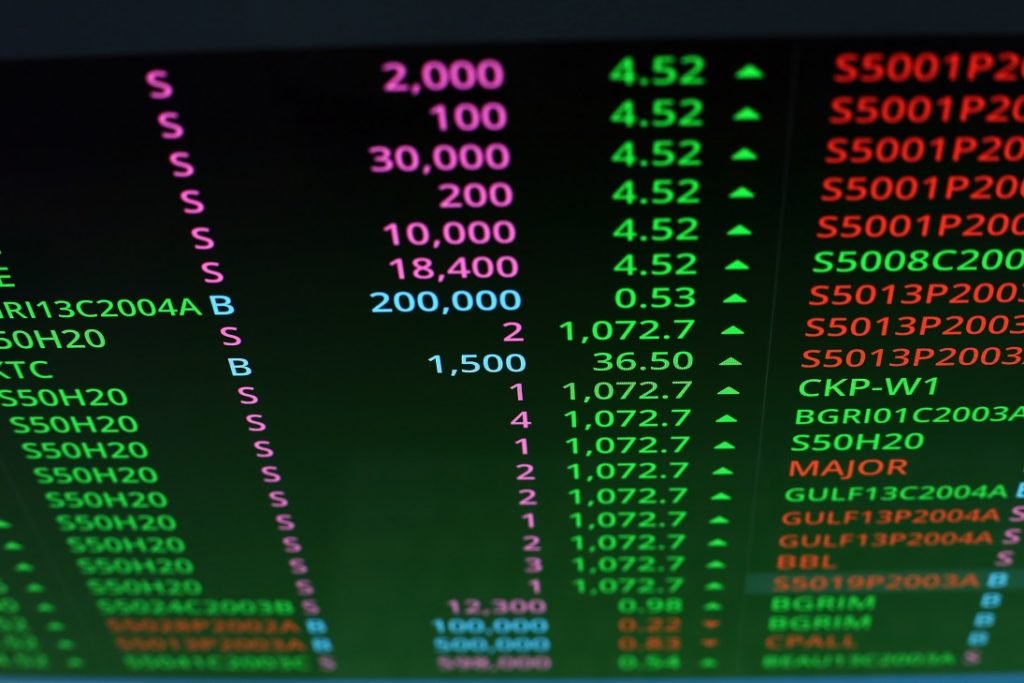
In finance, momentum refers to the notion that assets increasing in price will continue to increase, and assets decreasing in price will continue to decrease. The entire concept of momentum is based on the observation that trends in the prices of financial assets tend to continue in the same direction. By analyzing the momentum of assets, such as stocksStockWhat is a stock? An individual who owns stock in a company is called a shareholder and is eligible to claim part of the company’s residual assets and earnings (should the company ever be dissolved). The terms "stock", "shares", and "equity" are used interchangeably., investors can determine which assets to purchase to capitalize on upward or downward price trends.
Summary
- Momentum is the observation that financial assets trending strongly in a certain direction will continue to move in that direction.
- To calculate momentum, returns are measured over time to determine the rate of momentum over a specific time period.
- Traders can use the direction of price trends to make buy or sell decisions, also known as momentum trading.
Understanding Momentum
Fundamentally, momentum is the observation that asset prices tend to increase or decrease based on the direction of recent trends. Although the concept typically refers to the prices of securities, such as stocks, it can also exist in a wider range of financial assets, such as real estateReal EstateReal estate is real property that consists of land and improvements, which include buildings, fixtures, roads, structures, and utility systems. Property rights give a title of ownership to the land, improvements, and natural resources such as minerals, plants, animals, water, etc. or corporate bonds.
To calculate momentum, returns are measured over time to determine the rate of momentum over a specific time period. For example, a stock’s six-month momentum is equivalent to its performance over the past six months. Securities with positive returns over time are described as showing positive momentum, while securities with negative returns demonstrate negative momentum.
Abnormality of Momentum
The presence of momentum is the result of anomalies in the financial markets. The Efficient Market HypothesisEfficient Markets HypothesisThe Efficient Markets Hypothesis is an investment theory primarily derived from concepts attributed to Eugene Fama's research work. states that asset prices reflect all available information, and only new information should affect asset prices. Past performance should not be an indicator of future performance, and the fact that stock prices are increasing should not be a reason for further increases.
Therefore, assuming the efficient market hypothesis holds, momentum should not exist. However, some researchers attribute the anomaly of momentum to investor irrationality. While the efficient market hypothesis assumes rational behavior, momentum may be attributed to irrational behavior, such as cognitive biasCognitive BiasA cognitive bias is an error in cognition that arises in a person’s line of reasoning when making a decision is flawed because of their personal beliefs. Cognitive errors play a major role in behavioral finance theory or other behavioral effects.
Momentum Trading
To take advantage of momentum in the markets, traders can utilize the direction of price trends to make buy or sell decisions. Traders can profit from buying securities during periods of positive momentum or short-selling securities during periods of negative momentum. Contrary to the typical advice of “buy low and sell high,” momentum trading focuses on riding the upward or downward trends in the price of a security.
Momentum traders are betting on the likelihood that the price of a security will continue to move in a certain direction up until the trend comes to an end. However, past performance is not a predictor of future performance, so there is still risk involved with momentum trading, as it can be difficult to predict whether a price trend has reached the peak or hit the bottom.
Absolute vs. Relative Momentum
When employing momentum trading strategies, there are two main categories that traders can engage in:
Absolute momentum is a strategy that compares the price of a security against its historical performance. When employing an absolute momentum strategy, a trader should buy when the momentum is positive and sell when the momentum is negative.
For example, if the 12-month momentum of a stock is significantly positive, a momentum trader would purchase more shares. In contrast, and a trader would short-sell shares if the 12-month momentum were negative.
Relative momentum focuses on comparing the performance of different securities and purchasing the ones that demonstrate a higher rate of momentum. Suppose you own shares in Company A with a 12-month return of 10% and shares in Company B with a 12-month return of 35%. Following a relative momentum strategy, a trader would increase their shares in Company B and decrease their shares in Company A.
Related Readings
CFI is the official provider of the Commercial Banking & Credit Analyst (CBCA)™Program Page - CBCAGet CFI's CBCA™ certification and become a Commercial Banking & Credit Analyst. Enroll and advance your career with our certification programs and courses. certification program, designed to transform anyone into a world-class financial analyst.
In order to help you become a world-class financial analyst and advance your career to your fullest potential, these additional resources will be very helpful:
- Market IndicatorsMarket IndicatorA market indicator is a quantitative tool that is used by traders to interpret financial data in order to forecast stock market movements.
- Momentum InvestingMomentum InvestingMomentum investing is an investment strategy aimed at purchasing securities that have been showing an upward price trend or short-selling securities that
- Moving AverageMoving AverageA moving average is a technical indicator that market analysts and investors may use to determine the direction of a trend. It sums up the data points
- Investing: A Beginner’s GuideInvesting: A Beginner's GuideCFI's Investing for Beginners guide will teach you the basics of investing and how to get started. Learn about different strategies and techniques for trading
-

Biological Assets: Definition, Examples & Accounting
Biological Assets are assets that are living – for example, trees, animals, or cannabis. The balance sheetBalance SheetThe balance sheet is one of the three fundamental financial statements. The
-

Understanding Financial Assets: Definitions & Types
Financial assets refer to assets that arise from contractual agreements on future cash flowsCash Flow StatementA cash flow Statement contains information on how much cash a company generated an
invest
- Investable Assets: A Comprehensive Guide for Investors
- Understanding Deficit Equity: Causes, Impacts & Solutions
- Asset Dissipation: Financing Your Home with Liquid Assets
- Arbitrageurs: Understanding Market Inefficiencies & Profit Opportunities
- Understanding Hard Assets: Definition, Examples & Investment
- Momentum Investing: A Comprehensive Guide for Investors
- Trading Assets: Definition, Types & How They Work
- Understanding Asset Impairment: Causes and Impact
- Understanding Trusts: A Comprehensive Guide to Asset Management & Estate Planning
-
 Understanding Non-Monetary Assets: Definition & Examples
Non-monetary assets are assets whose value frequently changes in response to changes in economic and market conditions. The assets appear on the balance sheet under intangible and non-current assetsNo...
-
 Understanding Quick Assets: Definition & Examples
Quick assets are those assets that can be converted into cash within a short period of time. The term is also used to refer to assets that are already in cash form. They are considered to be the most ...