
Understanding Small-Cap Stocks: Definition & Investment Potential
Small caps refer to companies with a market capitalization generally ranging from $300 million to $2 billion. The market capitalization denotes the fair market value of the outstanding shares of any company that trades on a stock exchange. However, a company’s market capitalization will constantly change due to the fluctuations in the share price.

Small caps tend to perform well during the early phase of the economic cycle. Investors seeking higher returns on their investments usually invest in the stocks of small caps.
Summary
- Small caps refer to companies with a market capitalization ranging from $300 million to $2 billion.
- The stocks of small caps are prone to wide market fluctuations; hence, these are highly risky investments.
- Small caps can offer high growth opportunities, however they sometimes require additional capital to aid expansion.
Small Caps and Investments
Investors looking to invest in the stocks of small caps should be aware of the following features of the stocks:
1. Volatility
The value of stocks of small caps is greatly influenced by fluctuations in the market, which makes the stocks highly volatile. Hence, small-cap stocks tend to perform well during market uptrends and underperform when the market struggles.
2. Risk
Since the stocks of small caps are prone to market fluctuations, they tend to be affected more during the times when the market is hit – such as during recessionRecessionRecession is a term used to signify a slowdown in general economic activity. In macroeconomics, recessions are officially recognized after two consecutive quarters of negative GDP growth rates. – and take time to recover from them. Such market behavior makes the investment in small caps higher risk.
4. Return on investments
The value of shares of small caps are relatively small, but can increase two or threefold quite rapidly. They can potentially become multi-baggers and yield more than 100% returns.
5. Cost of the Investment
In addition to the cost of acquiring the shares of small caps, many funds charge an annual fee – known as the expense ratio – to manage the fund Investors that can find funds that invest in small-cap stocks with the lowest expense ratio tend to generate higher returns.
6. Term of investment
Both short-term and long-term options are available to the investors investing in the shares of small caps. However, it is recommended to invest in small caps for the long term to allow time for those companies to grow and increase in value.
7. Taxes
The gains received from investing in small caps are subjected to capital gains tax. If the shares were held for less than a year, the capital gain is taxed at the ordinary income tax rate. However, the long-term capital gain tax is applicable to returns on the investments held for more than a year.
Advantages of Investing in Small Caps
1. Higher growth potential
Historically, small caps have performed better than large caps in terms of growth. Small caps offer higher growth prospects, and may require capital to enhance their growth prospects.
2. Fairly priced shares
Institutional investorsInstitutional InvestorAn institutional investor is a legal entity that accumulates the funds of numerous investors (which may be private investors or other legal entities) to try to restrict themselves from buying large blocks of shares issued by small caps; as this reduces the liquidity of the shares Liquidity is essential to providing open trading of a small cap’s stock which is essential to creating fair prices for shares.
3. Quality stocks at low prices
Small caps are sometimes under-rated, and their shares are undervalued due to possible inefficiencies in the market. Hence, with some research and evaluation of the market, investors can benefit by acquiring such quality stocks found at low prices.
Risks Associated with Investing in Small Caps
The shares of small caps are prone to market risks, which can be reduced through portfolio diversification. Small-cap stocks are also less liquid or harder to sell, because there are smaller pools of investors interested in these companies.
Investors need to spend sufficient time to research small-cap stocks as an investment option, and they are more appropriate for investors with greater risk toleranceRisk ToleranceRisk tolerance refers to the amount of loss an investor is prepared to handle while making an investment decision. Several factors determine the level of.
More Resources
CFI is the official provider of the Capital Markets & Securities Analyst (CMSA)™Program Page - CMSAEnroll in CFI's CMSA® program and become a certified Capital Markets &Securities Analyst. Advance your career with our certification programs and courses. certification program, designed to transform anyone into a world-class financial analyst.
To keep learning and developing your knowledge of financial analysis, we highly recommend the additional resources below:
- Capitalization-Weighted IndexCapitalization-Weighted IndexThe Capitalization-Weighted Index (cap-weighted index, CWI) is a type of stock market index in which each component of the index is weighted relative to its total market capitalization. In a capitalization-weighted index, companies with larger market capitalization exert a greater impact on the index value.
- Penny StocksPenny StockA penny stock is a common share of a small public company that is traded at a low price. The specific definitions of penny stocks may vary among countries. For example, in the United States, the stocks that are traded at a price less than $5 are considered
- Strategic Asset AllocationStrategic Asset Allocation (SAA)Strategic asset allocation refers to a long-term portfolio strategy that involves choosing asset class allocations and rebalancing the allocations
- Weighted Average Shares OutstandingWeighted Average Shares OutstandingWeighted average shares outstanding refers to the number of shares of a company calculated after adjusting for changes in the share capital over a reporting period. The number of weighted average shares outstanding is used in calculating metrics such as Earnings per Share (EPS) on a company's financial statements
-

Understanding Management Fees: What They Are & How They Work
Management fees are fees paid to professionals entrusted with managing investments on a client’s behalf. Typically determined as a percentage of the total assets under management (AUM)Assets Und
-
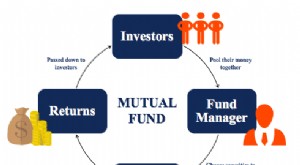
Mutual Funds Explained: A Beginner's Guide to Investing
Mutual Funds are pools of money collected from many investors for the purpose of investing in stocksStockWhat is a stock? An individual who owns stock in a company is called a shareholder and is eligi
invest
- Top Small-Cap Index Funds: A Comprehensive Guide
- Baby Bonds: A Comprehensive Guide to Investing in Children's Futures
- Understanding Bonds: A Comprehensive Guide for Investors
- Understanding Commodities: A Beginner's Guide to Investing
- Defensive Industries: Stability in Economic Uncertainty | [Your Company Name]
- Understanding Financial Derivatives: A Comprehensive Guide
- Understanding Distressed Securities: Risks & Opportunities
- Understanding Exchange-Traded Derivatives: Options & Futures
- Small-Cap Stocks: Definition, Risks & Investment Strategies
-
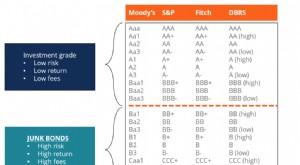 Understanding Junk Bonds: Risks, Rewards, and Investment Strategies
Junk bonds, also known as high-yield bonds, are bonds that are rated below investment grade by the big three rating agencies (see image below). Junk bonds carry a higher risk of defaultMarket Ri...
-
 Managed Futures: A Comprehensive Guide for Diversified Investing
Managed futures is a subclass of alternative investment strategies used by large funds and institutional investors to achieve both portfolio and market diversification. With the ability to take both l...