
Understanding Intangible Assets: Key Characteristics & Value
Assets come in three main forms: tangible, intangible and monetary. The two main characteristics of an intangible asset are that it is not physical, meaning it exists as a legal power, and that it is identifiably separate from other assets. An intangible asset has value to the company, though putting a figure on this value can be more subjective than with physical items or financial assets.
Intangible
Intangible means that an asset does not take physical form in the same way as a factory, machine or retail outlet does. The definition covers the asset itself rather than the expression of an asset. For example, a business may hold patent certificates granted by the relevant authorities. In this case the asset is not the certificate itself, even though that is the legal proof, but rather the intellectual property, meaning the patent is an intangible asset.
Identifiable
An intangible asset must be identifiable. There are two main components to being identifiable. The first is that the asset comes from a legal or contractual right, such as an existing agreement to supply a particular customer. The second is that the asset can be separated from assets and could be sold or otherwise transferred in its own right.
Other Characteristics
As with all assets, an intangible asset must be under the control of the business, meaning it has the ability to gain from the use of the asset, for example by having the right to make products protected by a trademark. There must also be a reasonable expectation that these gains will continue in the future.
Exceptions
Monetary assets do not come under the classification of intangible assets. This is the case even if the asset otherwise meets the criteria. Examples of monetary assets include money deposited in a bank account, money lent to other companies, investments in financial products, and money that is owed by customers.
-

Understanding Non-Monetary Assets: Definition & Examples
Non-monetary assets are assets whose value frequently changes in response to changes in economic and market conditions. The assets appear on the balance sheet under intangible and non-current assetsNo
-
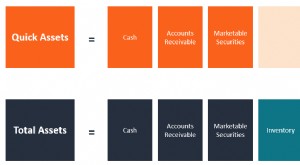
Understanding Quick Assets: Definition & Examples
Quick assets are those assets that can be converted into cash within a short period of time. The term is also used to refer to assets that are already in cash form. They are considered to be the most
investing
- Key Characteristics of a Successful Budget: Planning & Savings
- Investable Assets: A Comprehensive Guide for Investors
- Understanding Common Stock: Features, Benefits & Risks
- Operating Asset Turnover Ratio: Definition & Analysis
- Understanding Amortization of Intangible Assets: A Comprehensive Guide
- Understanding Intangible Assets: Definition & Importance
- Non-Current Assets: Definition, Examples & Accounting
- Understanding Stranded Assets: Risks and Impacts
- Understanding Asset Types: A Comprehensive Guide
-
 Fixed Assets: Definition, Examples & Importance for Businesses
Fixed assets refer to long-term tangible assetsTangible AssetsTangible assets are assets with a physical form and that hold value. Examples include property, plant, and equipment. Tangible assets are ...
-
 Monetary Assets: Definition, Examples & Key Characteristics
Monetary assets are assets that carry a fixed value in terms of currency units (e.g., dollars, euros, yen). They are stated as a fixed value in dollar terms even when macroeconomic factors, such as in...