
Contributed Surplus Explained: Understanding Stockholders' Equity
Contributed surplus is an account in the shareholders’ equityStockholders EquityStockholders Equity (also known as Shareholders Equity) is an account on a company's balance sheet that consists of share capital plus section of the balance sheet that reflects excess amounts collected from the issuance of shares above their par value. The account also holds gains and losses from the issuance, repurchase, and cancellation of shares, as well as gains and losses from the sale of complex financial instruments. It is also commonly referred to as Additional Paid-In CapitalAdditional Paid In CapitalAdditional Paid In Capital (APIC) is the value of share capital above its stated par value and is listed under Shareholders' Equity on the balance sheet..
A contributed surplus transaction will typically specify where the surplus is coming from. Different companies may set up a varying number of related accounts, each with specific names highlighting where the amount has come from.

Contributed Surplus Account Types
Regardless of what the account is named, there are three main types of contributed surplus accounts. Each type has different criteria for recognizing equity that falls under it.
Type A
This type of contributed surplus account carries any excess on the issuance of shares with a par value. If shares are issued at par value, then no amount is recorded in this account.
Example: CFI Inc. issues 50,000 $1 par value common shares at $25 each, and so receives $1,250,000 in cash for the transaction. $50,000 (50,000 shares * $1/share) is allocated to the common stock equity account, and $1,200,000 (50,000 shares * ($25-$1)) is allocated to a Contributed Surplus account – Issuance of Common Shares.
Type B
These accounts carry any gains or losses made on repurchasing its own stock. When a stock is purchased, it is removed from the books at the value it was issued at, and any difference between book value and what the company paid (market value) is recorded in this account.
Example: CFI Inc. decides to repurchase all 50,000 shares it originally issued in the previous example. In the time that has passed since then, the market value of the shares declined to $20. This means that the company records $5 in value per share on the repurchase for a total of $250,000 (50,000 shares x $5 / share). This extra $250,000 is credited into Contributed Surplus – Repurchase and Cancellation of Common Shares, which is a Type B account.
Type C
These accounts carry any other equity value on share transactions that don’t fall under type A or B. These accounts also carry any values that result from the sale of complex financial instruments.
Common Type C accounts include:
- Warrants
- Expired warrants
- Stock Options
- Expired Stock Options
- Conversion rights (on convertible bonds)
Additional Resources
CFI’s mission is to help you advance your career and become a world-class financial analyst. In order to help you along your path, these additional CFI resources will be helpful:
- Additional Paid-In CapitalAdditional Paid In CapitalAdditional Paid In Capital (APIC) is the value of share capital above its stated par value and is listed under Shareholders' Equity on the balance sheet.
- How to Value a Private CompanyPrivate Company Valuation3 techniques for Private Company Valuation - learn how to value a business even if it's private and with limited information. This guide provides examples including comparable company analysis, discounted cash flow analysis, and the first Chicago method. Learn how professionals value a business
- Investment Banking InternshipsInvestment Banking Internship ProgramsMost investment banks offer an investment banking internship program each year, hiring a number of Summer Analysts and Associates to work for 9-12 weeks in their offices. These programs are great for both parties: the interns get phenomenal experience and get to see what its like
- Financial Modeling Best PracticesFinancial Modeling Best PracticesThis article is to provide readers information on financial modeling best practices and an easy to follow, step-by-step guide to building a financial model.
-

Understanding Salvage Value: Definition & Importance
Salvage value is the amount that an asset is estimated to be worth at the end of its useful life. It is also known as scrap value or residual value, and is used when determining the annual depreciatio
-
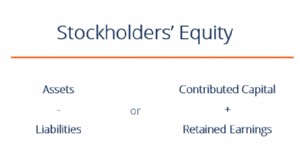
Understanding Stockholders Equity: A Comprehensive Guide
Stockholders Equity (also known as Shareholders Equity) is an account on a company’s balance sheetBalance SheetThe balance sheet is one of the three fundamental financial statements. The financi
Accounting
- Understanding Financial Denomination: A Comprehensive Guide
- Understanding Equity: A Comprehensive Guide for Investors
- Face Value Explained: Definition, Examples & Importance
- Understanding Fair Value: Definition & Importance
- Understanding Money: Definition, History & Value
- Nominal Value Explained: Definition & Financial Significance
- Understanding Value Change: How Share Prices Reflect Market Dynamics
- Additional Paid-In Capital vs. Contributed Capital: Key Differences Explained
- Par Value Explained: Understanding Bonds & Stocks
-
 Negative Goodwill Explained: Understanding Bargain Purchases
The negative goodwill (NGW) amount, also known as the “bargain purchase” amount, is the difference between the purchase price paid for an asset and its actual fair market value. ...
-
 Prepaid Lease Explained: Definition, Benefits & How It Works
A prepaid lease (or operating lease) is a contract to acquire the use of tangible assetsTangible AssetsTangible assets are assets with a physical form and that hold value. Examples include property, p...