
Debt Refinancing: A Comprehensive Guide to Lowering Your Payments
Debt refinancing is the replacement of an existing debt by means of another debt with terms and/or conditions that are more favorable. In other words, debt refinancing refers to the replacement of existing debt with new debt.
How It Works
Debt refinancing is commonly used to take advantage of new financing that offers more favorable terms and/or conditions. In such a situation, an individual or company will settle their current debt outstanding through issuing new debt with more favorable terms or conditions. The process is illustrated below:

The most common reasons to refinance debt are:
- To take advantage of better interest rateInterest RateAn interest rate refers to the amount charged by a lender to a borrower for any form of debt given, generally expressed as a percentage of the principal. terms of the new debt;
- To reduce the monthly repayment amount by entering into new debt with longer terms;
- To switch from a variable-rate debt to a fixed-rate debt or vice versa (commonly done in changing interest rate environments).
Practical Example
An individual currently has $1,000,000 remaining on their mortgageMortgageA mortgage is a loan – provided by a mortgage lender or a bank – that enables an individual to purchase a home. While it’s possible to take out loans to cover the entire cost of a home, it’s more common to secure a loan for about 80% of the home’s value. for 20 years at 10%. In such a situation, the monthly installment payments (principal and interest) would be $9,650. The bank has indicated to the individual that they would be able to refinance to a 7% loan for 20 years due to a decrease in the bank’s interest rate.
As such, the monthly installment payments for the new mortgage would be $7,753. If the individual refinances their mortgage, they would be saving $1,897 ($9,650 – $7,753) in monthly installment payments.
Limitations to Refinancing Existing Debt
Although refinancing existing debt is an attractive option for borrowers, it may not be feasible in some cases. Debt may include call provisions so that a penalty payment is incurred to the borrower if they refinance the debt. In addition, there may be closing and/or transaction feesTransaction CostsTransaction costs are costs incurred that don’t accrue to any participant of the transaction. They are sunk costs resulting from economic trade in a market. In economics, the theory of transaction costs is based on the assumption that people are influenced by competitive self-interest. associated with refinancing existing debt.
As such, although an individual or company may have the option to secure better terms and/or conditions on their debt, it may not be ideal to do so when considering the penalty payment, closing fees, and/or transaction fees.
In the example above, refinancing the debt would save the individual approximately $455,280 over the life of the mortgage. If the penalty payment, closing fees, and/or transaction fees do not amount up to $455,280, the individual should refinance the debt. If the penalty payment, closing fees, and/or transaction fees exceed $455,280, it would not be in the best interest of the individual to refinance their debt.
Debt Refinancing vs. Debt Restructuring
The two terms are commonly used interchangeably. Readers should note that they are actually different.
To reiterate, debt refinancing is used to convey the replacement of existing debt with new debt that offers more favorable terms or conditions. On the other hand, debt restructuringDebt RestructuringDebt restructuring is a process wherein a company or other entity experiencing financial distress and liquidity problems refinances its existing debt obligations in order to gain more flexibility in the short term and to make its debt load more manageable overall. is used to describe the altering of existing debt. It can be in the form of delaying interest payments or extending the term of the debt. Debt restructuring is commonly used by a company that is approaching bankruptcy and needs to restructure its debt to stay afloat.
For example, in September 2018, Sears Holdings Corp. proposed restructuring the company’s debt to avoid bankruptcy. As such, debt restructuring was used to change the existing debt structure of a near-bankrupt company.
Additional Resources
CFI is the official provider of the Financial Modeling and Valuation Analyst (FMVA)™Become a Certified Financial Modeling & Valuation Analyst (FMVA)®CFI's Financial Modeling and Valuation Analyst (FMVA)® certification will help you gain the confidence you need in your finance career. Enroll today! certification program, designed to transform anyone into a world-class financial analyst.
To keep learning and developing your knowledge of financial analysis, we highly recommend the additional CFI resources below:
- Distressed DebtDistressed DebtDistressed debt refers to the securities of a government or company which has either defaulted, is under bankruptcy protection, or is in financial distress and moving toward the aforementioned situations in the near future. It includes all credit instruments that are trading at a significant discount
- LIBORLIBORLIBOR, which is an acronym of London Interbank Offer Rate, refers to the interest rate that UK banks charge other financial institutions for
- Loan CovenantLoan CovenantA loan covenant is an agreement stipulating the terms and conditions of loan policies between a borrower and a lender. The agreement gives lenders leeway in providing loan repayments while still protecting their lending position. Similarly, due to the transparency of the regulations, borrowers get clear expectations of
- Senior and Subordinated DebtSenior and Subordinated DebtIn order to understand senior and subordinated debt, we must first review the capital stack. Capital stack ranks the priority of different sources of financing. Senior and subordinated debt refer to their rank in a company's capital stack. In the event of a liquidation, senior debt is paid out first
-

Leveraged Finance Explained: Strategies & Applications
Leveraged finance is the use of an above-normal amount of debt, as opposed to equity or cash, to finance the purchase of investment assets. Leveraged finance is done with the goal of increasing a
-

Understanding Market Value of Debt: Beyond Book Value
The Market Value of Debt refers to the market price investors would be willing to buy a company’s debt for, which differs from the book value on the balance sheet. A company’s debt doesn&r
finance
- Understanding Capital: Types, Categories & Value Creation
- Understanding Debt: Types, Obligations & Financial Implications
- Understanding Debt Capacity: A Guide for Businesses
- Debt Consolidation: Simplify Payments & Lower Interest Rates
- Understanding Debt Default: Causes, Consequences, and Prevention
- Debt Financing: A Comprehensive Guide for Businesses
- Debt Restructuring: A Comprehensive Guide for Financial Distress
- Debt Settlement: Definition, How It Works & Is It Right For You?
- Unitranche Debt Explained: Structure, Benefits & Risks
-
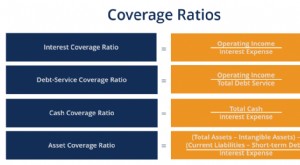 Coverage Ratio: Understanding Your Company's Debt Repayment Ability
A Coverage Ratio is any one of a group of financial ratios used to measure a company’s ability to pay its financial obligationsDebt CapacityDebt capacity refers to the total amount of debt a bus...
-
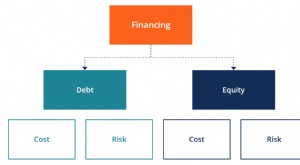 Understanding Business Financing: A Comprehensive Guide
Financing refers to the methods and types of funding a business uses to sustain and grow its operations. It consists of debtSenior and Subordinated DebtIn order to understand senior and subordinated d...