
Evergreen Funding: A Continuous Capital Solution for Business Growth
Evergreen funding describes a type of business funding that is gradual and ongoing, as opposed to a one-time infusion of capital. The phrase originated in the United Kingdom.

Evergreen funding is typically spoken of in relation to the funding a business receives from venture capital firmsVenture CapitalistsVenture capitalists are investors who provide financing to start-ups or small companies that are looking to expand. The beneficiary companies are usually. Venture capital firms may provide initial funding and/or later-stage funding that may be needed when a company looks to expand its market or engage in new product development.
The term evergreen funding is also sometimes applied in an investing context. In such a case, the term refers to venture capital funds and describes how a fund is structured.
Summary
- Evergreen funding is a term that refers to funding that is provided to a company on an ongoing basis rather than as a one-time lump sum of cash.
- Evergreen funding arrangements offer flexibility to both borrowers and investors.
- Such funding arrangements often resemble a line of credit loan, where the borrower can access up to a specified maximum amount of funds as needed.
Evergreen Funding vs. Traditional Funding
Evergreen funding stands in contrast to traditional business funding, which is usually a one-off affair. That is, a venture capital firm or other investor provides a one-time lump-sum of capital to a company – typically in return for an equity interestEquity FinancingEquity financing refers to the sale of company shares in order to raise capital. Investors who purchase the shares are also purchasing in the company. Again, the funding provided may be initial start-up funding for a business or later-stage funding provided when a company is already established and growing.
In contrast, evergreen funding consists of funding that is gradually dispensed by the investor to the borrower (the company in need of capital). The fact that money is provided to the borrowing firm on an ongoing basis gives the loan arrangement its “evergreen” nature.
A variety of funding structures may be used in such an evergreen funding arrangement. Additional funds beyond an initial investment may be doled out according to an agreed-upon timetable. Alternatively, additional capital may be released to the borrower when it achieves certain milestones in growth – such as a certain level of annual revenue.
The funding arrangement may also be set up in a form similar to a line of credit. In that case, the investor agrees to provide money to the borrower as needed, up to a specified maximum amount and usually limited to a certain time frame.
Practical Example
Let’s look at an example of an evergreen funding arrangement. Assume that Company ABC is looking to secure both start-up and additional funding for a retail clothing business. The company needs start-up capital to create and manufacture its products and to open an initial retail store. It also anticipates needing additional funding at various points in the future to open more retail locations gradually and to develop and manufacture additional products.
Convinced that Company ABC’s business planBusiness PlanA business plan is a document that outlines how and why a new business is being created. A well-researched and comprehensive business plan is important is viable, Venture Capital Firm XYZ agrees to provide funding to the company as follows:
- The venture capital firm agrees to provide up to $20 million in total funding.
- Some $7 million in initial funding will be provided to Company ABC to help get the company to the point of having manufactured products and a first retail store.
- A maximum of $13 million in additional funding will be made available to the company.
- The company can draw on the additional funding as needed as it grows its business and expands, opening more stores and producing more products.
- The stated terms for receiving additional funds specify that the company can access up to an additional $2 million in funding for every $1 million it generates in annual sales; for example, if the company generates $2 million in revenues during its third year in operation, it would be able to access up to $4 million of the available $13 million in investment capital.
- Additional funding will only be provided up to a maximum time frame of five years from the date of the initial funding of $7 million; beyond that time, any remaining amount of the potential $13 million in additional funding will revert to the investor and no longer be available for the company to access.
Evergreen Investment Funds
“Evergreen” has also come to refer to the structure of some hedge funds, private equity fundsPrivate Equity FundsPrivate equity funds are pools of capital to be invested in companies that represent an opportunity for a high rate of return. They come with a fixed, or venture capital funds. Traditionally, investments in such funds offered investors very little flexibility. One’s investment was tied up in what is known as a closed-ended fund for several years. However, in recent years, many private equity investment firms have begun to offer their clients open-ended funds that offer greater flexibility to investors.
Such funds are set up so that investors have the option to cash out or re-allocate their investment funds periodically, even though the investment firm is still maintaining investments in the fund’s portfolio companies.
Evergreen funds also offer increased flexibility to the investment firms, as they can continue to raise investment capital for the fund on an ongoing basis. These funds exist as ongoing investment enterprises rather than having a specified end date.
Keep Reading
CFI offers the Commercial Banking & Credit Analyst (CBCA)®Program Page - CBCAGet CFI's CBCA™ certification and become a Commercial Banking & Credit Analyst. Enroll and advance your career with our certification programs and courses. certification program for those looking to take their careers to the next level. To keep learning and developing your knowledge base, please explore the additional relevant resources below:
- Angel InvestorAngel InvestorAn angel investor is a person or company that provides capital for start-up businesses in exchange for ownership equity or convertible debt. They may provide a one-time investment or an ongoing capital injection to help the business move through the difficult early stages.
- Debt vs Equity FinancingDebt vs Equity FinancingDebt vs Equity Financing - which is best for your business and why? The simple answer is that it depends. The equity versus debt decision relies on a large number of factors such as the current economic climate, the business' existing capital structure, and the business' life cycle stage, to name a few.
- Additional Paid-in CapitalAdditional Paid In CapitalAdditional Paid In Capital (APIC) is the value of share capital above its stated par value and is listed under Shareholders' Equity on the balance sheet.
- Series A FinancingSeries A FinancingSeries A financing (also known as series A round or series A funding) is one of the stages in the capital-raising process by a startup. Essentially, the series A round is the second stage of startup financing and the first stage of venture capital financing.
-

Understanding Acquisition Cost: Definitions & Applications
Acquisition cost is the cost of purchasing an asset. It is generally used in three different contexts in business, which include the following:Mergers and acquisitionsFixed assetsCustomer acquisition&
-

Advertising Budget: Definition, Planning & Best Practices
An advertising budget is a company’s allocation of promotional expenditures over a specified time period. It is a measure of a company’s planned expenditure on accomplishing marketing obje
finance
- Acquirer Definition: Understanding Corporate Acquisitions
- Understanding Clawbacks: Protecting Stakeholders from Failed Performance
- Understanding Financial Gearing: Debt & Leverage Explained
- Leverage in Finance: Strategies, Types & Risks
- Parent Company Explained: Definition, Control & Examples
- Understanding Stocks: A Beginner's Guide to Share Ownership
- Understanding Net-Net: A Financial Health Indicator
- EBITA Explained: Understanding Earnings Before Interest, Taxes, and Amortization
- Funding Request: A Comprehensive Guide for Business Plans
-
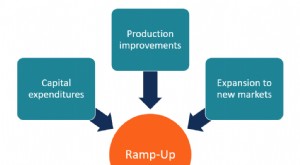 Ramp-Up: Definition, Benefits & How to Achieve It
In business, ramp-up is a term that describes a significant increase in the output of a company’s products or services. Essentially, ramp-up implies bringing the company’s capacity utiliza...
-
 Streamlining Processes: Definition, Benefits & Techniques
Streamlining refers to the improvement of the efficiency of a certain process within an organization. It can be done by automationExcel vs Automation in Financial ModelingBefore we discuss Excel vs au...