
EV/Gross Profit Ratio: Definition & Interpretation | [Your Company Name]
The EV/Gross Profit Ratio is a profitability financial ratio that estimates the enterprise value of a company to its gross profit. It demonstrates how many dollars of enterprise value are generated for every dollar of gross profit earned. Generally, the lower the ratio, the lower is the company’s net worth. It is calculated as a percentage of enterprise value to the gross profit generated by the company.
![EV/Gross Profit Ratio: Definition & Interpretation | [Your Company Name]](https://www.etffin.com/Article/UploadFiles/202110/2021100815143263.jpeg)
Quick Summary
- The EV/Gross Profit Ratio is a profitability financial ratio that estimates the enterprise value of a company to its gross profit.
- It demonstrates how many dollars of enterprise value are generated for every dollar of gross profit earned.
- The ratio is calculated as a percentage of enterprise value to the gross profit generated by the company. Generally, the lower the ratio, the lower is the company’s net worth.
What is Enterprise Value?
Enterprise value (EV) is a measure of a company’s total worth or net capitalization. Enterprise value, in its calculation, includes the market capitalizationMarket CapitalizationMarket Capitalization (Market Cap) is the most recent market value of a company’s outstanding shares. Market Cap is equal to the current share price multiplied by the number of shares outstanding. The investing community often uses the market capitalization value to rank companies of the company and both its short-term and long-term debt. EV is a popular financial metric used to value a company during a potential takeover.
Enterprise Value = Market Capitalization + Total Debt + Cash & Cash Equivalents
While it is similar to market capitalization in some aspects, enterprise value is different from a simple market capitalization in a few ways. It is a more accurate representation of a company’s net worth, as it includes debt in its calculation.
What is Gross Profit?
Gross profit is a company’s profit after the deduction of the cost of goods sold (COGS)Cost of Goods Sold (COGS)Cost of Goods Sold (COGS) measures the “direct cost” incurred in the production of any goods or services. It includes material cost, direct. It is also known as sales profit or gross income. Gross profit is calculated by deducting the cost of goods sold from total revenue.
Gross Profit = Total Revenue – Cost of Goods Sold (COGS)
Gross profit is an effective measure to assess a company’s efficiency in producing goods and services. It is a very good indicator of the cost of productionCost of ProductionCost of production refers to the total cost incurred by a business to produce a specific quantity of a product or offer a service. and provides insight on whether the cost is too high or too low. Gross profit is often confused with operating profit, which is the total earnings of a company before interest and tax, but after accounting for all fixed costs and operating expenses. The calculation of gross profit involves the deduction of variable costs or the costs of goods sold.
Uses of the EV/Gross Profit Ratio
1. As a measure of profitability
The EV/Gross Profit Ratio is a measure of profitability for a company. It assesses the enterprise value generated for every dollar of gross profit earned.
2. As a measure of net worth
The EV/Gross Profit Ratio is also an effective measure of net worth. Generally, the lower the ratio, the lower is the company’s worth, indicating that the company is undervalued.
3. As a measure of fair value
The EV/Gross Profit Ratio is an accurate measure of the fair value of a company. It is because its calculation accounts for debt. It is exceptionally beneficial during the acquisition process because the acquirer would ultimately end up taking on the debt along with the company’s assets.
Additional Resources
CFI offers the Financial Modeling & Valuation Analyst (FMVA)™Become a Certified Financial Modeling & Valuation Analyst (FMVA)®CFI's Financial Modeling and Valuation Analyst (FMVA)® certification will help you gain the confidence you need in your finance career. Enroll today! certification program for those looking to take their careers to the next level. To keep learning and advancing your career, the following resources will be helpful:
- Book Value vs Fair ValueBook Value vs Fair ValueIn accounting and finance, it is important to understand the differences between book value vs fair value. Both concepts are used in the
- EBIT GuideEBIT GuideEBIT stands for Earnings Before Interest and Taxes and is one of the last subtotals in the income statement before net income. EBIT is also sometimes referred to as operating income and is called this because it's found by deducting all operating expenses (production and non-production costs) from sales revenue.
- Fixed and Variable CostsFixed and Variable CostsCost is something that can be classified in several ways depending on its nature. One of the most popular methods is classification according
- Operating IncomeOperating IncomeOperating income is the amount of revenue left after deducting the operational direct and indirect costs from sales revenue.
-
![Shareholder Equity Ratio: Definition & Calculation | [Your Company Name]](https://www.etffin.com/article/uploadfiles/202110/2021100815180064_S.png)
Shareholder Equity Ratio: Definition & Calculation | [Your Company Name]
The shareholder equity ratio is a ratio that shows the amount of a company’s assets that have been financed using the owner’s equity instead of debt. It shows the portion of shareholders&r
-
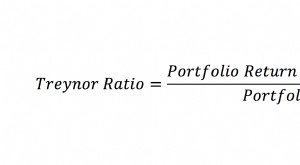
Treynor Ratio: Understanding Risk-Adjusted Portfolio Performance
The Treynor Ratio is a portfolio performance measure that adjusts for systematic riskSystematic RiskSystematic risk is that part of the total risk that is caused by factors beyond the control of a spe
finance
- Acid-Test Ratio: Understanding Your Company's Short-Term Liquidity
- Current Ratio: Definition, Calculation & Financial Health
- Gross Margin Ratio: Definition & Calculation | [Your Brand/Website]
- Gross Merchandise Value (GMV): Definition & Importance
- Operating Ratio: Definition, Calculation & Importance
- Quick Ratio: Understanding Your Business's Short-Term Liquidity
- Reserve Ratio Explained: Understanding Bank Reserves
- Understanding the Retention Ratio: Reinvesting for Growth
- Sharpe Ratio: Calculate & Interpret Investment Performance
-
 Inventory Turnover Ratio: Definition & Calculation
The inventory turnover ratio, also known as the stock turnover ratio, is an efficiency ratio that measures how efficiently inventoryInventoryInventory is a current asset account found on the bala...
-
 Loan-to-Value (LTV) Ratio: Understanding Risk & Home Equity
The loan-to-value (LTV) ratio is a financial ratio that compares the size of a loan to the value of an asset that is purchased using the proceeds of the loan. The LTV ratio is an important metric that...