
Understanding Liquid Equity: A Guide to Company Stock

Equity is another name for a company stock. When you buy shares in company stock, you take an ownership interest in the company and each share of stock represents a percentage of company equity you own. Equities are usually liquid, which means you can buy and sell them quickly. However, the level of liquidity can vary greatly among different company stocks.
Equity Basics
When a company wishes to raise money for future growth and operating expenses, it can sell ownership shares to investors. A share of stock represents one unit of equity in the company that issued it. If a company issues 100 shares of stock, one share would represent a 1 percent ownership equity in the company. Most companies, however, typically issue millions of shares, which means that each share represents a very small equity percentage.
Liquidity
In financial terms, liquidity is the measure of how fast you can turn something into cash. For example, if you own a house, it can sometimes take many months or even years to sell it in order to turn your investment into cash. Thus, a house is not a liquid investment. A financial equity, by comparison, is very liquid. If you wish to sell shares of stock, you can usually sell them within a matter of minutes or even seconds.
Trading Volume
In the stock market, liquidity is measured by trading volume. Trading volume is the number of shares that exchange hands each day. Some stocks are very popular and trade millions of shares per day, while those from lesser-known companies may only have a few hundred shares exchange hands in a day.
How Liquidity Affects Investors
Highly liquid stocks, such as Apple Computer, have trading volume that measures in the millions. If an equity is very liquid, you can usually buy or sell almost immediately at the price that is currently being quoted by your broker. If a stock has low trading volume, however, you may find that you have to pay a higher price in order to buy it quickly, or offer a lower price in order to sell it quickly.
-

Parent Company Explained: Definition, Control & Examples
A parent company is a company that owns more than 50% of the outstanding voting shares of another company. Therefore, it controls the other company or companies and can directly influence the business
-

Understanding Stocks: A Beginner's Guide to Share Ownership
When a person owns stock in a company, the individual is called a shareholder and is eligible to claim part of the company’s residual assets and earnings (should the company ever have to dissolv
investing
- Understanding Stockholders' Equity: Factors & Impact
- Equity Valuation: A Comprehensive Guide for Investors
- Debt/Equity Swap: Understanding Financial Restructuring
- Understanding the Envy Ratio in Private Equity
- Equity Financing: A Comprehensive Guide for Business Growth
- Equity Multiplier: Definition, Calculation & Financial Significance
- Equity Ratio: Understanding Financial Leverage & Risk
- Return on Common Equity (ROCE): Definition & Importance
- Portfolio Companies: Definition & How Private Equity Uses Them
-
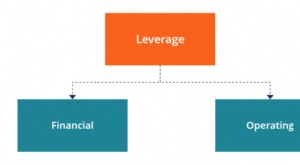 Leverage in Finance: Strategies, Types & Risks
In finance, leverage is a strategy that companies use to increase assets, cash flows, and returns, though it can also magnify losses. There are two main types of leverage: financial and operating. To ...
-
 Understanding Negative Equity: Causes, Risks & Solutions
The concept of negative equity arises when the value of an asset (which was financed using debt) falls below the amount of the loan/mortgage that is owed to the bank in exchange for the assetTangible ...