
Short Interest Ratio: Understanding Investor Sentiment & Market Risk
The short interest ratio is a mathematical indicator of the average number of days it takes for short sellers to repurchase borrowed securities in the open marketOpen MarketAn open market is an economic system with no trade barriers to free market activities. In an open market, buyers and sellers can do business freely without.

Summary
- The short interest ratio is a mathematical indicator of the average number of days it takes for short sellers to repurchase borrowed securities in the open market.
- The ratio is calculated by dividing the total number of shorted shares of a stock by the average daily trading volume.
- When the short interest ratio is high, the number of shares that will be repurchased in the open market after short selling is high, and similarly, if the short interest ratio is low, it means that the number of shares that will be repurchased in the open market after short selling is low.
How to Calculate the Short Interest Ratio
The short interest ratio is calculated by dividing the total number of shorted shares of a stock by the average daily trading volume (ADTV)Average Daily Trading Volume (ADTV)Average Daily Trading Volume (ADTV) is a technical indicator used by investors that refers to the number of shares of a particular stock that. To put it in a formula:

What Does the Short Interest Ratio Imply?
The short interest ratio is a mathematical indicator in finance. It depends on two factors – short interest and average daily trading volume. It ultimately indicates whether it is the right time to short sell.
When the ADTV is high, the short interest ratio is low. When the ADTV is low, the short interest ratio is high. Similarly, when the total short interest is high, the ratio is high, and when the total short interest is low, the ratio is low.
It indicates how high or how low the shorted shares are compared to the average daily trading volume. When the short interest ratio is high, the number of shares that will be repurchased in the open market after short selling is high. Similarly, if the short interest ratio is low, it means that the number of shares that will be repurchased in the open market after short selling is low.
What is the Days to Cover Ratio?
The short interest ratio is often used interchangeably in place of the days to cover ratio. The days to cover ratio is similar to the short interest ratio and measures the anticipated number of days to cover a position on the shorted shares issued by a company.
Therefore, the days to cover ratio basically represents the total number of days for short sellers to repurchase their borrowed shares from the open market.
Hence, when the days to cover ratio is high, it is a bearish indicator. Conversely, if the days to cover ratio is low, it is a bullish indicator.
Short Interest (SI) vs. Short Interest Ratio (SIR)
The short interest ratio is the ratio of short interest to the average daily trading volume. Short interest is a part of the short interest ratio but is not the same as the ratio. Short interest is the number of shares that are short sold divided by the total number of outstanding shares.
A key difference between them is that the short interest ratio takes liquidity into account since it considers the ADTV. On the other hand, short interest does not take the ADTV into account; hence, it does not account for the liquidityLiquidityIn financial markets, liquidity refers to how quickly an investment can be sold without negatively impacting its price. The more liquid an investment is, the more quickly it can be sold (and vice versa), and the easier it is to sell it for fair value. All else being equal, more liquid assets trade at a premium and illiquid assets trade at a discount. prevailing in the market in its calculation.
Related Readings
CFI offers the Capital Markets & Securities Analyst (CMSA)®Program Page - CMSAEnroll in CFI's CMSA® program and become a certified Capital Markets &Securities Analyst. Advance your career with our certification programs and courses. certification program for those looking to take their careers to the next level. To keep learning and developing your knowledge base, please explore the additional relevant resources below:
- Financial RatiosFinancial RatiosFinancial ratios are created with the use of numerical values taken from financial statements to gain meaningful information about a company
- Trading SecuritiesTrading SecuritiesTrading securities are securities purchased by a company for the purpose of realizing a short-term profit. The securities are issued within the company's industry,
- Short SellingShort SellingShort selling is the practice of selling borrowed securities – such as stocks – hoping to be able to make a profit by buying them back at a
- Volume of TradeVolume of TradeVolume of trade, also known as trading volume, refers to the quantity of shares or contracts that belong to a given security traded on a daily basis
-

Advertising to Sales Ratio: Measuring Ad Effectiveness & ROI
The advertising to sales ratio, also called the “A to S” for short, measures the effectiveness, or how successful, a company’s advertising strategiesAIDA ModelThe AIDA model, which s
-

Understanding the CAPE Ratio: A Guide to Cyclically Adjusted P/E
The CAPE Ratio (also known as the Shiller P/E or PE 10 Ratio) is an acronym for the Cyclically-Adjusted Price-to-Earnings Ratio. The ratio is calculated by dividing a company’s stock price by th
invest
- Current Ratio: Definition, Calculation & Financial Health
- Operating Ratio: Definition, Calculation & Importance
- Quick Ratio: Understanding Your Business's Short-Term Liquidity
- Reserve Ratio Explained: Understanding Bank Reserves
- Understanding the Retention Ratio: Reinvesting for Growth
- Sharpe Ratio: Calculate & Interpret Investment Performance
- Times Interest Earned (TIE) Ratio: Calculation & Interpretation
- Understanding Short Interest: A Guide for Investors
- Understanding the Short Interest Ratio: A Key Indicator for Investors
-
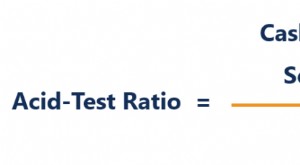 Acid-Test Ratio: Understanding Your Company's Short-Term Liquidity
The Acid-Test Ratio, also known as the quick ratioQuick RatioThe Quick Ratio, also known as the Acid-test, measures the ability of a business to pay its short-term liabilities with assets readily conv...
-
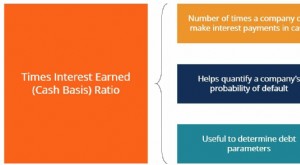 Times Interest Earned Ratio (Cash Basis): Calculation & Interpretation
The Times Interest Earned (Cash Basis) (TIE-CB) ratio is very similar to the Times Interest Earned RatioTimes Interest EarnedThe Times Interest Earned (TIE) ratio measures a companys ability to meet i...