
Capital Budgeting: A Comprehensive Guide for Business Leaders
Capital budgeting refers to the decision-making process that companies follow with regard to which capital-intensive projects they should pursue. Such capital-intensive projects could be anything from opening a new factory to a significant workforce expansion, entering a new market, or the research and developmentResearch and Development (R&D)Research and Development (R&D) is a process by which a company obtains new knowledge and uses it to improve existing products and introduce of new products.

Whether such investments are judged worthwhile depends on the approach that the company uses to evaluate them. This is where capital budgeting comes in. For instance, a company may choose to value its projects based on the internal rate of returnIRR FunctionThe IRR function is categorized under Excel Financial functions. IRR will return the Internal Rate of Return for a given cash flow, that is, the initial investment value and a series of net income values. In financial modeling, as it helps calculate the return an investment would earn based on series of cash flows they provide, their net present valueNet Present Value (NPV)Net Present Value (NPV) is the value of all future cash flows (positive and negative) over the entire life of an investment discounted to the present., payback periods, or a combination of such metrics.
Best Practices in Capital Budgeting
While most big companies use their own processes to evaluate projects in place, there are a few practices that should be used as “gold standards” of capital budgeting. This can help to guarantee the fairest project evaluation. A fair project evaluation process tries to eliminate all non-project related factors and focus purely on assessing a project as a stand-alone opportunity.
Decisions based on actual cash flows
Only incremental cash flows are relevant to the capital budgeting process, while sunk costsSunk CostA sunk cost is a cost that has already occurred and cannot be recovered by any means. Sunk costs are independent of any event and should not should be ignored. This is because sunk costs have already occurred and had an impact on the business’ financial statements. As such, they should not be taken into consideration when assessing the profitability of future projects. Doing so could skew the perception of management.
Cash flow timing
Analysts try to predict exactly when cash flows will occur, as cash flows received earlier in the life of projects are worth more than cash flows received later. Congruent with the concept of the time value of moneyTime Value of MoneyThe time value of money is a basic financial concept that holds that money in the present is worth more than the same sum of money to be received in the future. This is true because money that you have right now can be invested and earn a return, thus creating a larger amount of money in the future. (Also, with future, cash flows that are received sooner are more valuable. This is because they can be used right away in other investment vehicles or other projects. In other words, cash flows that occur earlier have a larger time horizon. This makes them more valuable than cash flow that occurs at a later date. Cash flow considerations are an important factor in capital budgeting.
Cash flows are based on opportunity costs
Projects are evaluated on the incremental cash flows that they bring in over and above the amount that they would generate in their next best alternative use. This is done to quantify just how much better one project is over another. To calculate this, management may consider the difference in the NPV, IRR, or payback periods of two projects. Doing so provides a valuable capital budgeting perspective in evaluating projects that provide strategic value that is more difficult to quantify.

Cash flows are computed on an after-tax basis
Since interest payments, taxes, and amortization and depreciation are expenses that occur independently of a project, they should not be taken into account when assessing a project’s profitability. Assuming that the company will draw upon the same source of capital to finance such projects and that the cash flows of all projects will be recorded in the same tax environments, these considerations are essentially constants. Thus, they can be removed from the decision-making process.
Financing costs are ignored from the calculations of operating cash flows
Financing costs are reflected in the required rate of return from an investment project, so cash flows are not adjusted for these costs. The costs are typically congruent with the company’s Weighted Average Cost of Capital (WACC)WACCWACC is a firm’s Weighted Average Cost of Capital and represents its blended cost of capital including equity and debt., which represents the cost the company incurs to run its current capital structure. During project valuations, the discount rate used is often the WACC of the company. Therefore, this is another constant that can be ignored as well.
More Resources
We hope you enjoyed reading CFI’s explanation of Capital Budgeting. CFI offers the Financial Modeling & Valuation Analyst (FMVA)™Become a Certified Financial Modeling & Valuation Analyst (FMVA)®CFI's Financial Modeling and Valuation Analyst (FMVA)® certification will help you gain the confidence you need in your finance career. Enroll today! certification program for those looking to take their careers to the next level. To learn more about related topics, check out the following CFI resources:
- Budget HolderBudget HolderThe person who is ultimately responsible for ensuring that the budget is followed is known as the Budget Holder. Budget holders are usually the managers and operational directors of companies who are tasked by the owners/shareholders or the board of directors to ensure that the company follows its budget
- Due Diligence in Project FinanceDue Diligence in Project FinanceDue diligence in project finance involves managing and reviewing the aspects related to a deal. Proper due diligence ensures no surprises arise in regard to a financial transaction. The process involves a comprehensive examination of the transaction and preparation of a credit appraisal note.
- Project BudgetProject BudgetThe Project Budget is a tool used by project managers to estimate the total cost of a project. A project budget template includes a detailed estimate of all costs that are likely to be incurred before the project is completed.
- Types of BudgetsTypes of BudgetsThere are four common types of budgeting methods that companies use: (1) incremental, (2) activity-based, (3) value proposition, and (4)
-

Venture Capital: Funding Startups & Understanding Equity
Venture capital is a form of financing that provides funds to early-stage, emerging companies with high growth potential, in exchange for equity Stockholders EquityStockholders Equity (also known as S
-
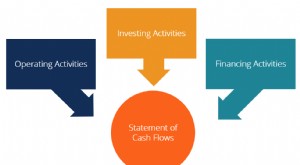
Understanding the Statement of Cash Flows: A Comprehensive Guide
The Statement of Cash Flows (also referred to as the cash flow statementCash Flow StatementA cash flow Statement contains information on how much cash a company generated and used during a give
finance
- Capital Appropriation: Definition, Process & Examples
- Basel I: Understanding Core Banking Regulations & Capital Requirements
- Beyond Budgeting: A Modern Approach to Organizational Control
- Understanding Capital: Types, Categories & Value Creation
- Capital Rationing: Definition, Strategy & Impact on Investment Decisions
- Understanding Cash Consideration in Mergers & Acquisitions
- Understanding Cash Flow: A Comprehensive Guide
- Discounting: Understanding Present Value & Future Cash Flows
- Capital Budgeting: Evaluating Investments for Business Growth
-
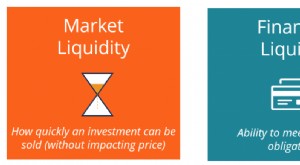 Understanding Liquidity in Financial Markets: A Comprehensive Guide
In financial marketsFinancial MarketsFinancial markets, from the name itself, are a type of marketplace that provides an avenue for the sale and purchase of assets such as bonds, stocks, foreign excha...
-
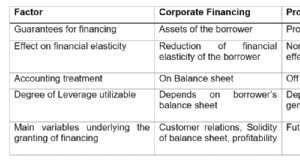 Profit vs. Cash Flow: Understanding the Key Difference
Understanding the difference between profit vs cash is very important in the finance industry. Profit is defined as revenue less all the expenses of a company in a certain period, while cash flow is c...