
Gross Merchandise Value (GMV): Definition & Importance
Gross Merchandise Value (GMV), also referred to as gross merchandise volume, is the total amount of sales a company makes over a specified period of time, typically measured quarterly or yearly. GMV is calculated before accrued expenses are deducted. Accrued expenses include costs associated with advertising/marketing5 P's of MarketingThe 5 P's of Marketing – Product, Price, Promotion, Place, and People – are key marketing elements used to position a business strategically. The 5 P's of, delivery costs, discounts, and returns.

Breaking Down Gross Merchandise Value
Gross Merchandise Value is a metric most commonly used by e-commerce companiesStartup Valuation Metrics (for internet companies)Startup Valuation Metrics for internet companies. This guide outlines the 17 most important e-commerce valuation metrics for internet starts to be valued. It functions primarily as a comparative financial metric for such businesses, enabling them to review total sales volume from one recording period (whether it’s four times per year or once per year) to the total sales volume from another recording period. Ultimately, the metric is designed to help companies understand and put a figure on the growth of their business in terms of sales.
GMV is measured in dollars. Most e-commerce companies, especially when they first became popular, used the metric instead of revenue and/or sales data. Ultimately, using GMV as a standalone reference or instead of other metrics became widely considered as ineffective. Today, e-commerce companies typically utilize GMV in combination with other sales and revenue metrics to understand how their company is operating and growing.
How to Calculate Gross Merchandise Value
Gross Merchandise Value can be calculated in a number of different ways. The simplest and most often used formula is given below:
Gross Merchandise Value = Sales Price of Goods x Number of Goods Sold
GMV, using the calculation above, can be seen to also represent gross revenueSales RevenueSales revenue is the income received by a company from its sales of goods or the provision of services. In accounting, the terms "sales" and. For example, if an online company sells 15 customized notebooks at $10 per notebook, the GMV would be $150.
The Negative Aspects of Using GMV
While Gross Merchandise Value can be useful for a company in terms of understanding how many items are being sold and the amount of revenue being generated from them, it ultimately provides unrefined data that doesn’t really express the true value of the goods being sold or business profitability. This is because the costs and expenses associated with the production, manufacturing, and advertising for the items are not factored in.
Returns and discounts are also not included in the GMV figure, meaning the net incomeNet IncomeNet Income is a key line item, not only in the income statement, but in all three core financial statements. While it is arrived at through the company ultimately takes away from its total sales is not accurately represented.
Gross Merchandise Value, in and of itself, can be a valuable figure to use as a raw estimate of company earnings, as well as its function as a metric or unrefined predictor of growth. Still, it’s wise for a company to use GMV in conjunction with other financial metrics in order to get the most accurate and well-rounded picture of the company’s financial health, as well as its potential for growth.
Other Resources
Thank you for reading CFI’s explanation of Gross Merchandise Value. CFI is the official provider of the Financial Modeling and Valuation Analyst (FMVA)™Become a Certified Financial Modeling & Valuation Analyst (FMVA)®CFI's Financial Modeling and Valuation Analyst (FMVA)® certification will help you gain the confidence you need in your finance career. Enroll today! certification program, designed to transform anyone into a world-class financial analyst.
To keep learning and developing your knowledge of financial analysis, we highly recommend the additional CFI resources below:
- Accounts Payable vs Accounts ReceivableAccounts Payable vs Accounts ReceivableIn accounting, accounts payable and accounts receivable are sometimes confused with the other. The two types of accounts are very similar in
- Cost of Goods Sold (COGS)Cost of Goods Sold (COGS)Cost of Goods Sold (COGS) measures the “direct cost” incurred in the production of any goods or services. It includes material cost, direct
- Inventory TurnoverInventory TurnoverInventory turnover, or the inventory turnover ratio, is the number of times a business sells and replaces its stock of goods during a given period. It considers the cost of goods sold, relative to its average inventory for a year or in any a set period of time.
- Present Value of Growth Opportunities (PVGO)Present Value of Growth Opportunities (PVGO)Present Value of Growth Opportunities (PVGO) is a concept that gives analysts a different approach to valuation. Since prices in stock markets are a combination of fundamentals and expectations, we can break down the value of a stock to the sum of (1) its value assuming no earnings reinvested and (2) the present value
-
Understanding Forced Sale Value: A Business Valuation Guide
A forced sale value is the estimate of the amount that a business would receive if it sold off its assets one piece at a time during an unforeseen or uncontrollable event. The appraiser assumes that t
-

Gross Merchandise Value (GMV): Definition & Importance
Gross Merchandise Value (GMV), also referred to as gross merchandise volume, is the total amount of sales a company makes over a specified period of time, typically measured quarterly or yearly. GMV i
finance
- Understanding Financial Denomination: A Comprehensive Guide
- Understanding Equity: A Comprehensive Guide for Investors
- EV/Gross Profit Ratio: Definition & Interpretation | [Your Company Name]
- Face Value Explained: Definition, Examples & Importance
- Understanding Fair Value: Definition & Importance
- Understanding Money: Definition, History & Value
- Nominal Value Explained: Definition & Financial Significance
- Understanding Value Added: Definition & Business Applications
- What is Value Date?
-
 Compound Annual Growth Rate (CAGR): Definition & Calculation
CAGR stands for the Compound Annual Growth Rate. It is the measure of an investment’s annual growth rate over time, with the effect of compounding taken into account. It is often used to measure...
-
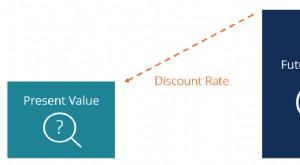 Discount Rate: Definition, Calculation & Importance in Finance
In corporate financeCorporate Finance OverviewCorporate finance deals with the capital structure of a corporation, including its funding and the actions that management takes to increase the value of,...