
Return on Common Equity (ROCE): Definition & Importance
The Return on Common Equity (ROCE) ratio refers to the return that common equity investors receive on their investment. ROCE is different from Return on Equity (ROE)Return on Equity (ROE)Return on Equity (ROE) is a measure of a company’s profitability that takes a company’s annual return (net income) divided by the value of its total shareholders' equity (i.e. 12%). ROE combines the income statement and the balance sheet as the net income or profit is compared to the shareholders’ equity. in that it isolates the return that the company sees on its common equity, rather than measuring the total returns that the company generated on all of its equity. Capital received from investors as preferred equityPreferred SharesPreferred shares (preferred stock, preference shares) are the class of stock ownership in a corporation that has a priority claim on the company’s assets over common stock shares. The shares are more senior than common stock but are more junior relative to debt, such as bonds. is excluded from this calculation, thus making the ratio more representative of common equity investor returns.
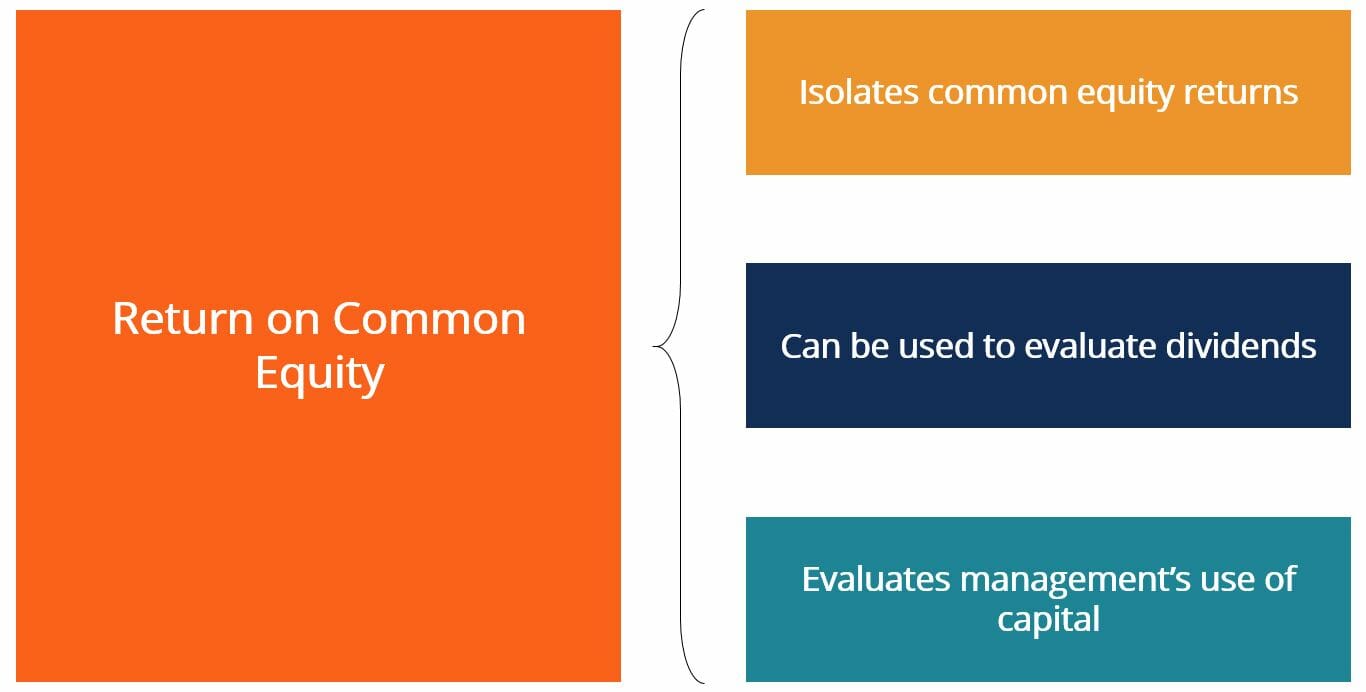
Return on Common Equity is used by some investors to assess the likelihood and size of dividendsDividendA dividend is a share of profits and retained earnings that a company pays out to its shareholders. When a company generates a profit and accumulates retained earnings, those earnings can be either reinvested in the business or paid out to shareholders as a dividend. that the company may pay out in the future. A high ROCE indicates the company is generating high profits from its equity investments, thus making dividend payouts more likely.
The ROCE ratio can also be used to evaluate how well the company’s management has utilized equity capital to generate values. A high ROCE suggests that the company’s management is making good use of equity capital by investing in NPV-positive projects. This should create more value for the company’s shareholders.
How to Calculate Return on Common Equity
Return on Common Equity (ROCE) can be calculated using the equation below:
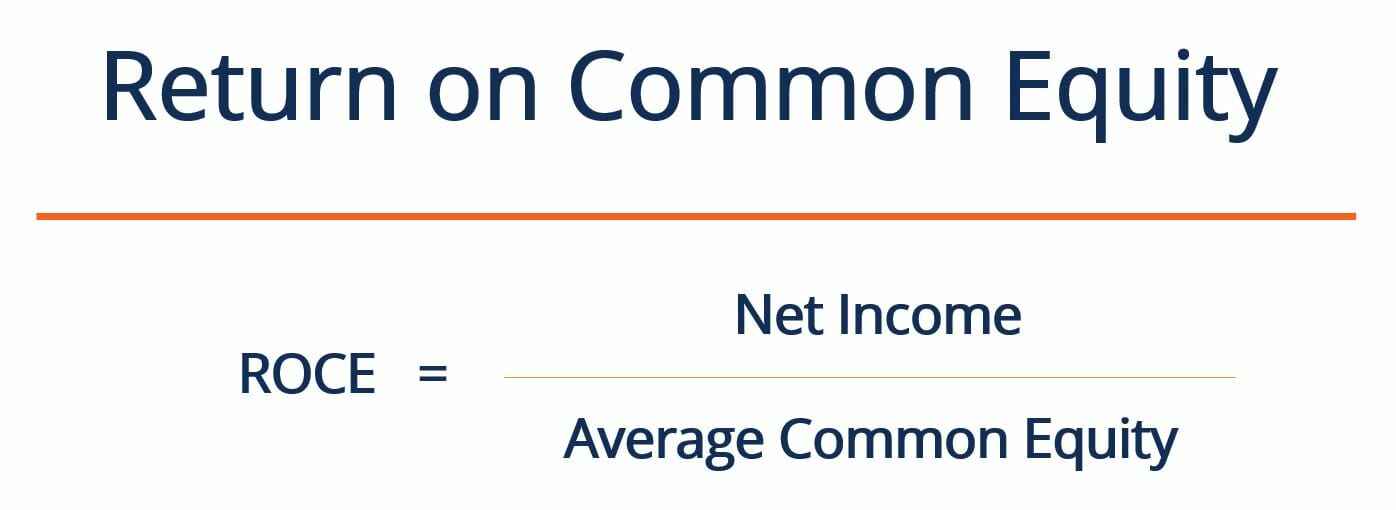
Where:
Net Income = After-tax earnings of the company for period t
Average Common Equity = (Common Equity at t-1 + Common Equity at t) / 2
As discussed above, the ratio can be used to assess future dividends and management’s use of common equity capital. However, it is not a perfect measure, since a high ROCE can be misleading.
Dividends are discretionary, meaning that a company is not under a legal obligation to pay dividends to common equity shareholders. Whether a company pays out dividends often depends on where the company is in its lifecycle. An early-stage company is likely to reinvest its earnings in growing the business, such as funding R&DResearch and Development (R&D)Research and Development (R&D) is a process by which a company obtains new knowledge and uses it to improve existing products and introduce for new products. A more mature company that is already profitable may choose to disburse its earnings as dividends to keep investors happy.
In terms of assessing management’s use of equity capital, analysts and investors should exercise caution in using the ROCE ratio. It is important to note that, just like ROE, ROCE can easily be overstated. Suppose that a company chooses to pursue an NPV-positive opportunity and funds the project with debt capital. The project pays off and the company sees its net income figure rise. In this scenario, ROCE would increase by a fair margin since the amount of outstanding common equity has not changed, but net income has increased. However, the rise in net income was not due to management’s effective use of equity capital. Instead, it was simply due to management’s use of funds in general.
In some cases, management bonuses are tied to hitting certain Return on Common Equity levels. Because of that fact, management may be tempted to take actions that inflate the ratio.
Return on Common Equity Example
Ben’s Ice Cream wants to calculate the return on common equity that the business generated over the past year. Below are snippets from the company’s income statement and balance sheets:
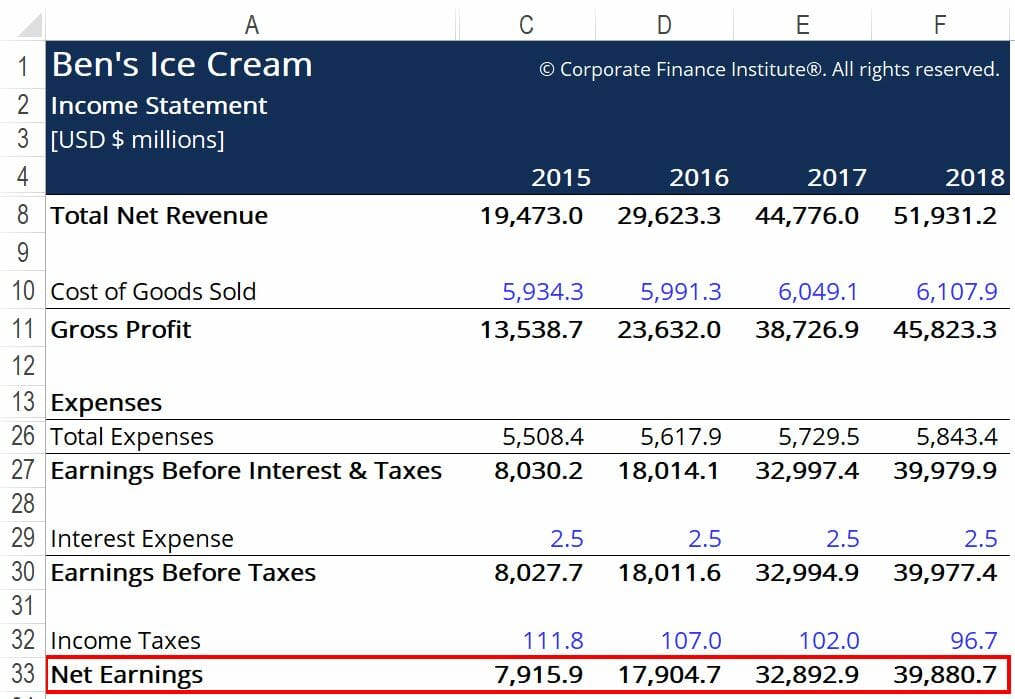
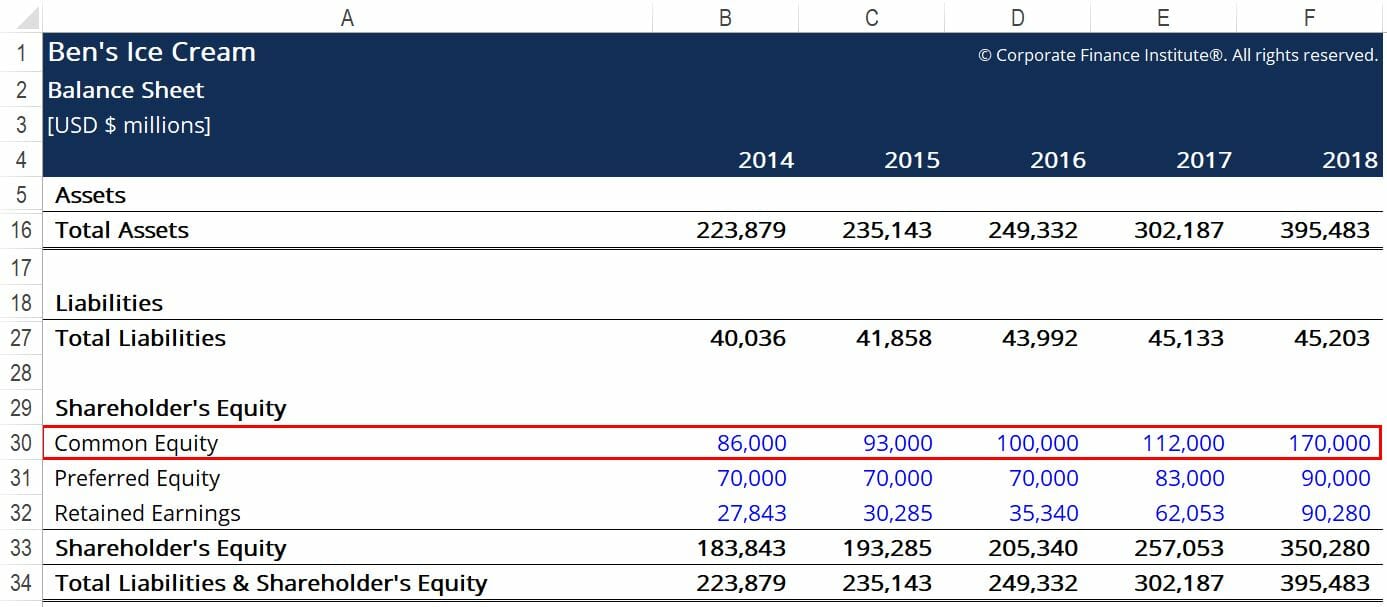
The red boxes highlight the important information that we need to calculate ROCE: net incomeNet IncomeNet Income is a key line item, not only in the income statement, but in all three core financial statements. While it is arrived at through and common equity. Using the formula provided above, we arrive at the following figures:
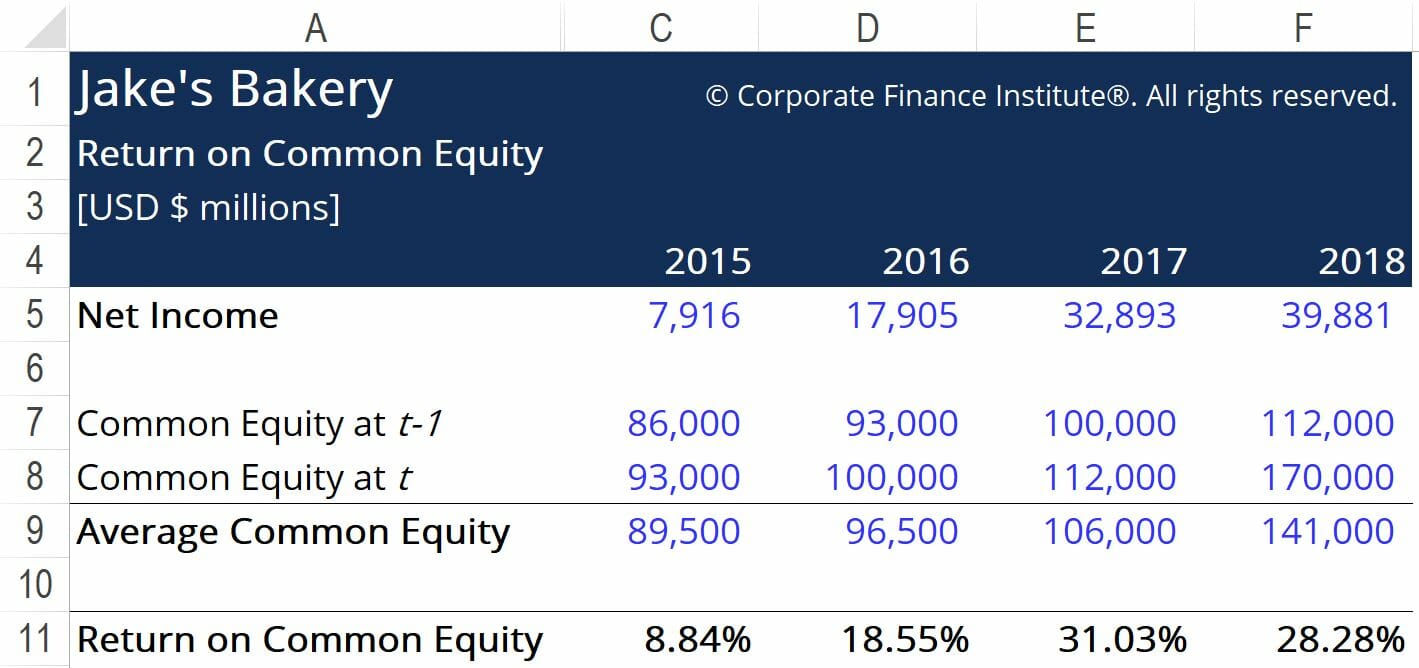
The return on common equity has been consistently trending up from 2015-2017, before dipping in 2018 due to a large equity issue.
Additional Resources
Thank you for reading this CFI article on the Return on Common Equity ratio! CFI offers the Financial Modeling & Valuation Analyst (FMVA)™Become a Certified Financial Modeling & Valuation Analyst (FMVA)®CFI's Financial Modeling and Valuation Analyst (FMVA)® certification will help you gain the confidence you need in your finance career. Enroll today! certification program for those looking to take their careers to the next level. To learn more about related topics, check out the following CFI resources:
- How to Calculate Debt Service Coverage RatioHow to Calculate Debt Service Coverage RatioThis guide will describe how to calculate the Debt Service Coverage Ratio. First, we will go over a brief description of the Debt Service Coverage Ratio, why it is important, and then go over step-by-step solutions to several examples of Debt Service Coverage Ratio Calculations.
- Current Portion of Long-Term DebtCurrent Portion of Long-Term DebtThe current portion of long-term debt is the portion of long-term debt due that is due within a year’s time. Long-term debt has a maturity of
- Defensive Interval RatioDefensive Interval RatioThe defensive interval ratio (DIR) is a financial liquidity ratio that indicates how many days a company can operate without needing to tap into capital sources other than its current assets. It is also known as the basic defense interval ratio (BDIR) or the defensive interval period ratio (DIPR).
- ROAS (Return on Ad Spend)ROAS (Return on Ad Spend)ROAS (Return on Ad Spend) is an important eCommerce metric. ROAS measures revenue generated per dollar of marketing spent. It is a similar and alternative profitability metric to ROI, or "Return on Investment". ROAS is commonly used in eCommerce businesses to evaluate the effectiveness of a marketing campaign.
-

Understanding Clawbacks: Protecting Stakeholders from Failed Performance
What happens when a person promises to perform and then fails to deliver on their promises? Or what happens when it is found that a performance reportDue Diligence ReportExample due diligence report o
-
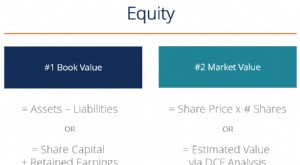
Understanding Equity: A Comprehensive Guide for Investors
In finance and accounting, equity is the value attributable to the owners of a business. The book value of equity is calculated as the difference between assetsTypes of AssetsCommon types of assets in
finance
- Understanding Liquid Equity: A Guide to Company Stock
- Understanding Common Stock: Ownership and Basics
- Debt/Equity Swap: Understanding Financial Restructuring
- Equity Financing: A Comprehensive Guide for Business Growth
- Equity Multiplier: Definition, Calculation & Financial Significance
- Equity Ratio: Understanding Financial Leverage & Risk
- Understanding Equity Risk Premium: Definition & Calculation
- Return on Equity (ROE): Definition & Calculation | [Your Company Name]
- Portfolio Companies: Definition & How Private Equity Uses Them
-
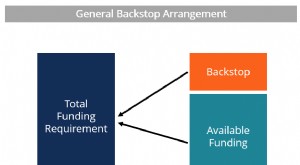 Backstop: Understanding Financial Safety Nets and Contingency Funding
A backstop is a financial arrangement that creates a secondary source of funds in case the primary source is not enough to meet current needs. It can also be thought of as an insurance policy that cov...
-
 Cash-on-Cash Return: Definition, Calculation & Importance
Cash on cash return is a rate of returnRate of ReturnThe Rate of Return (ROR) is the gain or loss of an investment over a period of time copmared to the initial cost of the investment expressed as a p...