
Understanding the Icahn Effect: How Activist Investing Impacts Stock Prices
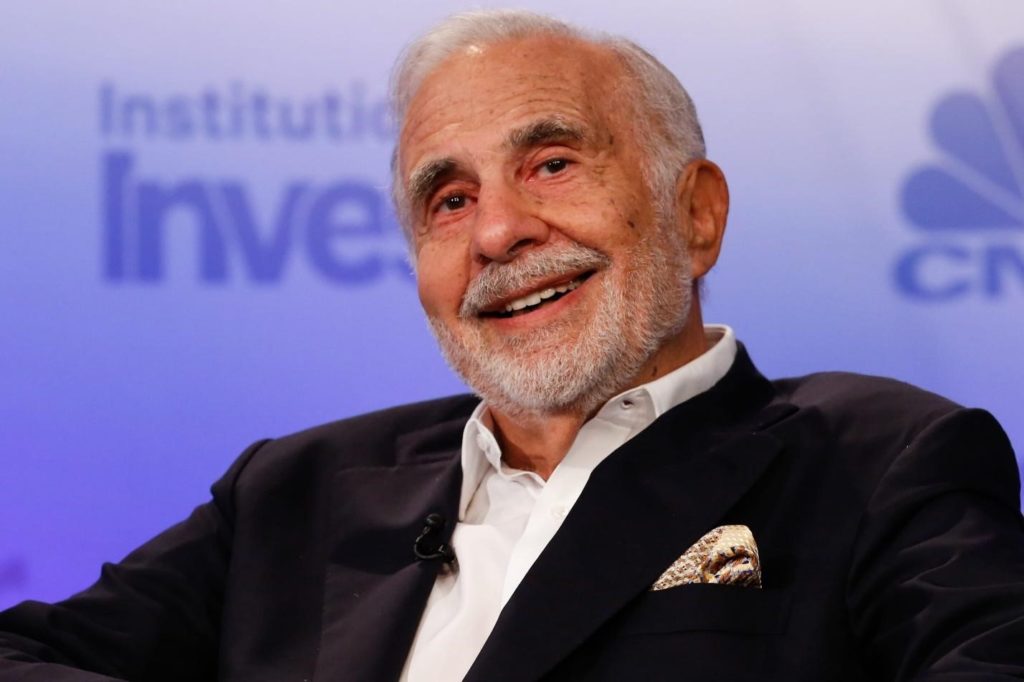
The “Icahn lift” refers to the effect on the share price of a company that American businessman Carl Icahn buys into. Due to Mr. Icahn’s prominent reputation of being an activist investorActivist InvestorAn activist investor is an individual or institutional investor that seeks to acquire a controlling interest in a target company by gaining seats on the, when he accumulates shares in a company, the market expectation is that he will act as an activist shareholder in said company and drive additional shareholder value (thereby increasing the share price).
Summary
- The “Icahn lift” refers to the effect on the share price of a company that Carl Icahn buys into.
- Carl Icahn is an American businessman who made a name for himself on Wall Street through being a corporate raider and an activist shareholder.
- Icahn is the founder and controlling shareholder of Icahn Enterprises and had briefly served as a special economic adviser on financial regulation to U.S. President Donald Trump in 2017.
Understanding the Icahn Lift
The process of the Icahn lift can be described as follows:
- Mr. Icahn accumulates a sizable position in a company that he believes is undervalued,
- The rationale for the company being undervalued is publicly outlined by Mr. Icahn (for example, poor management team, avoidable costs that are currently being incurred by the company, a poorly performing business segment, etc.),
- The company’s share price increases (i.e., the “Icahn lift”) if the rationale for the undervaluation of Mr. Icahn’s company is justifiable.
Brief Backgrounder on Carl Icahn
Born on February 16, 1936, Carl Icahn is an American businessman who made a name for himself on Wall Street through being a corporate raider and an activist shareholder. In the 1980s, corporate raiding in the U.S. was common – raiders bought large stakes in companies and used their shareholder rights to influence corporate and leadership decisions.
One of Mr. Icahn’s most prominent raids was of U.S. airline TWA, which he acquired control through a leveraged buyoutLeveraged Buyout (LBO)A leveraged buyout (LBO) is a transaction where a business is acquired using debt as the main source of consideration. in 1988 and eventually stripped of its assets for a substantial return. The following are two high-profile corporate takeovers by Carl Icahn:
- In 2006, Carl Icahn called for the break-up of Time Warner into four entities due to its poor management: AOL, networks and film, publishing, and cable. According to Mr. Icahn, the break-up per-share value of Time Warner was expected to be $23.30-$26.57 per share versus the then share price of $18.50. Although Mr. Icahn ultimately failed to get Time Warner to break up, he reached a settlement that included a share buyback and cost-cutting measures, which boosted Time Warner’s share price.
- In 2007, Carl Icahn acquired a 1.4% interest in Motorola, demanded a seat on the company’s board, and called for the company to return cash to shareholders through a stock buyback and increase its leverage. With Motorola reluctant to grant Mr. Icahn a board seat, Icahn sued Motorola in 2008 and forced a spin-off of its unprofitable mobile phone unit.
According to Forbes magazine on November 15, 2020, Mr. Icahn’s net worth is estimated to be $14.5 billion, and he is the 39th wealthiest person of the Forbes 400. He is the founder and controlling shareholder of Icahn Enterprises and briefly served as a special economic adviser on financial regulation to US President Donald Trump in 2017.
A Theoretical Example of the Icahn Lift
Several market participants notice that Mr. Icahn has been increasing his ownership stake in CookingAB Corp., a fictitious company. Days after the observation, he publishes a 200-page report in partnership with a colleague, outlining why CookingAB Corp. is undervalued: a poor management team, a loss of direction, and a bloated cost structureCost StructureCost structure refers to the types of expenses that a business incurs, and is typically composed of fixed and variable costs. Fixed costs remain unchanged.
In conjunction with the report, Mr. Icahn threatens to take over the company should the management team not employ the methods to increase shareholder value as outlined in the report. The 200-page report is digested by institutional investors, who agree that the company is undervalued. As a result, the institutional investors accumulate shares of the company, boosting its short-term share price.
Additional Resources
CFI offers the Capital Markets & Securities Analyst (CMSA)™Program Page - CMSAEnroll in CFI's CMSA® program and become a certified Capital Markets &Securities Analyst. Advance your career with our certification programs and courses. certification program for those looking to take their careers to the next level. To keep learning and advancing your career, the following resources will be helpful:
- Earnings Per Share (EPS)Earnings Per Share (EPS)Earnings per share (EPS) is a key metric used to determine the common shareholder's portion of the company’s profit. EPS measures each common share's profit
- Share RepurchaseShare RepurchaseA share repurchase refers to when the management of a public company decides to buy back company shares that were previously sold to the public. A company may decide to repurchase its sharesto send a market signal that its stock price is likely to increase, to inflate financial metrics denominated by the number of shares outstanding (e.g., earnings per share or EPS), or simply because it wants to increase its own equity stake in the company.
- Institutional InvestorInstitutional InvestorAn institutional investor is a legal entity that accumulates the funds of numerous investors (which may be private investors or other legal entities) to
- Shareholder ValueShareholder ValueShareholder value is the financial worth owners of a business receive for owning shares in the company. An increase in shareholder value is created
-
Debt-to-Asset Ratio: Definition, Calculation & Significance
The Debt to Asset Ratio, also known as the debt ratio, is a leverage ratioLeverage RatiosA leverage ratio indicates the level of debt incurred by a business entity against several other accounts in it
-
Defensive Interval Ratio (DIR): Understanding Company Liquidity
The defensive interval ratio (DIR) is a financial liquidity ratio that indicates how many days a company can operate without needing to tap into capital sources other than its current assetsCurrent As
invest
- Acid-Test Ratio: Understanding Your Company's Short-Term Liquidity
- Understanding the Earnings Multiplier (P/E Ratio): A Comprehensive Guide
- Understanding the IPO Process: A Comprehensive Guide
- Modigliani-Miller Theorem: Understanding Capital Structure & Firm Value
- Skin in the Game: Understanding Risk & Accountability
- Clientele Effect: How Investor Preferences Impact Stock Prices
- Understanding Lock-Up Periods After an IPO: A Comprehensive Guide
- Understanding the Primary Market: A Comprehensive Guide
- Understanding the Stock Market: A Beginner's Guide
-
 Asset Turnover Ratio: Definition & Calculation - Financial Analysis
The asset turnover ratio, also known as the total asset turnover ratio, measures the efficiency with which a company uses its assets to produce salesSales RevenueSales revenue is the income recei...
-
![Rule of 72: Calculate Investment Doubling Time | [Your Brand Name]](https://www.etffin.com/article/uploadfiles/202110/2021100815281678_S.png) Rule of 72: Calculate Investment Doubling Time | [Your Brand Name]
Rule of 72: Calculate Investment Doubling Time | [Your Brand Name]In finance, the Rule of 72 is a formula that estimates the amount of time it takes for an investment to double in value, earning a fixed annual rate of returnRate of ReturnThe Rate of Return (ROR) is ...