
K-Ratio Explained: Measuring Investment Growth & Consistency
The K-Ratio is a statistical tool that helps us measure two things – the growth of return and the consistency of that growth over a specified period. It is often used to determine the risk vs. reward of investing in a particular asset, as well as the consistency of the return on that risk. The calculation for the K-Ratio is performed by creating a linear trend for a data set and estimating the slope/variabilityVariabilityVariability is a term used to describe how much data points in any statistical distribution differ from each other and from their mean value of the data.
A higher K-Ratio is indicative of better performance than that of a low K-Ratio. The ratio can be a useful tool for any trader or investor to compare different equities that they may be researching to determine if it is a prudent investment or to be avoided in its entirety. The K-Ratio is often used in statistics to determine the overall trend line of a variable.
History of the K-Ratio
Lars Kestner created the K-Ratio in 1996 to measure the overall profitability of a strategy. The ratio was designed so that an investor or financial manager could look at a data set and try to obtain a straight line with little deviation. This would help to signify that they are looking at an asset or investment product with a lucrative return.
The K-Ratio, according to Kestner, was introduced as a complementary ratio to the Sharpe RatioSharpe RatioThe Sharpe Ratio is a measure of risk-adjusted return, which compares an investment's excess return to its standard deviation of returns. The Sharpe Ratio is commonly used to gauge the performance of an investment by adjusting for its risk.. Over the years, Kestner made minor adjustments to the ratio, including adjustment factors for different types of return observations and different return periods.
How to Calculate the K-Ratio
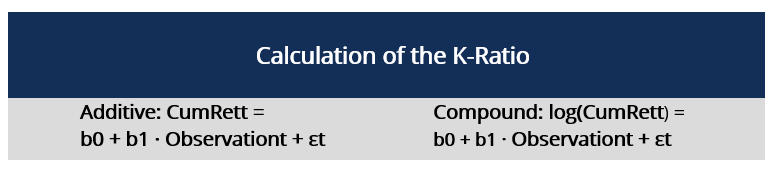
The K-Ratio’s calculation is performed by creating a time series of data that pertains to an event or strategy. The returns are added up in a compound fashion, and then summed geometrically. In a paper written by Lars Ketner, the creator of the K-Ratio, he cites its calculation as follows:
Finance Professionals and the K-Ratio
In the field of finance, K-Ratios can be used to measure the performance and long-term viability of equities and other securities. The K-Ratio is a useful tool; however, it is often used in conjunction with other key accounting and financial ratiosFinancial RatiosFinancial ratios are created with the use of numerical values taken from financial statements to gain meaningful information about a company to ascertain quantitative data on the viability of an investment.
Understanding trends is only part of the picture, and understating how qualitative factors can influence the trends is also critical in understanding potential dips in performance metrics like the K-Ratio. As finance professionals and students, we must always understand that no one tool is perfect in being a predictor of future performance, and often, knowing how to contextualize and interpret performance metrics in the broader picture can make us an effective professional or student.
Summary
- The K-Ratio helps us measure two things – the growth of return and the consistency of that growth over a specified period. A higher K-Ratio is indicative of better performance than that of a low K-Ratio.
- In the field of finance, K-Ratios can be used to measure the performance and long-term viability of equities and other securities.
- The ratio’s calculation is performed by creating a time series of data that pertains to an event or strategy. It was designed so that an investor or financial manager could look at a data set and try to obtain a straight line with little deviation.
Related Readings
CFI is the official provider of the global Commercial Banking & Credit Analyst (CBCA)™Program Page - CBCAGet CFI's CBCA™ certification and become a Commercial Banking & Credit Analyst. Enroll and advance your career with our certification programs and courses. certification program, designed to help anyone become a world-class financial analyst. To keep advancing your career, the additional resources below will be useful:
- Basic Statistics Concepts in FinanceBasic Statistics Concepts for FinanceA solid understanding of statistics is crucially important in helping us better understand finance. Moreover, statistics concepts can help investors monitor
- Rate of ReturnRate of ReturnThe Rate of Return (ROR) is the gain or loss of an investment over a period of time copmared to the initial cost of the investment expressed as a percentage. This guide teaches the most common formulas
- Time Series Data AnalysisTime Series Data AnalysisTime series data analysis is the analysis of datasets that change over a period of time. Time series datasets record observations of the same variable over various points of time.
- Trading MechanismsTrading MechanismsTrading mechanisms refer to the different methods by which assets are traded. The two main types of trading mechanisms are quote driven and order driven trading mechanisms
-
Return on Ad Spend (ROAS): Definition & Importance for eCommerce
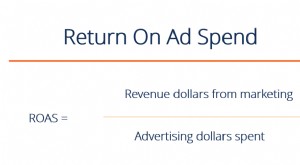
ROAS stands for “Return on Ad Spend,” a very popular financial metric in the world of digital marketing in particular, and a similar alternative metric to ROI, or “Return on Investme
-

Nifty 50: History, Significance & Key Stocks - A Comprehensive Guide
The Nifty 50 refers to the fifty most popular large-cap stocks that traded at high valuations in the 1960s and 1970s. They included household names such as Xerox (XRX), IBM, Polaroid and Coca-Cola (
invest
- Understanding Portfolio Active Return: Definition & Calculation
- Understanding Average Return: A Simple Guide
- Dow 30 Explained: Understanding the Dow Jones Industrial Average
- Understanding Expected Return: A Comprehensive Guide
- Holding Period Return (HPR): Definition & Calculation
- Modified Dietz Return: Calculation & Investment Portfolio Analysis
- Nominal Rate of Return: Definition & Calculation
- Understanding the Required Rate of Return: A Key Finance Concept
- Sortino Ratio: A Comprehensive Guide to Downside Risk
-
 Cash-on-Cash Return: Definition, Calculation & Importance
Cash on cash return is a rate of returnRate of ReturnThe Rate of Return (ROR) is the gain or loss of an investment over a period of time copmared to the initial cost of the investment expressed as a p...
-
 Understanding Rate of Return: A Comprehensive Guide
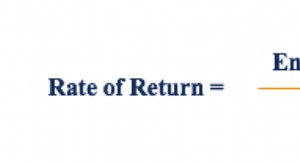
A Rate of Return (ROR) is the gain or loss of an investment over a certain period of time. In other words, the rate of return is the gainCapital Gains YieldCapital gains yield (CGY) is the price appre...