
Understanding Max Pain in Options Trading: Risks and Strategies
Max pain is a situation in which the stock price locks in on an option strike price as it nears expiration, which would cause financial losses for the highest possible number of options traders. It attempts to explain how, during the last days, the underlying stock prices often cluster around the strike prices to bring losses to the option buyers.

Summary
- Max pain is a trading concept that states that the market dynamics or manipulation can cause the market price of certain securities close to expiration to expire worthless.
- Max pain works under the assumption that near the expiration date, buying and selling stock options leads to price movements towards the point of maximum pain, or market setters manipulate price indices to gain more from the closing stock price.
- Using max pain to trade stock options is challenging since the strike price changes frequently.
Understanding Max Pain
Max pain is a term used to describe a somewhat controversial theory called Maximum Pain Theory, which states that there will be a maximum loss to investors who buy and hold option contacts until the expiration date. There are two assumptions for the occurrence.
- The first assumption is pegged on price movements, which is due to the legitimate buying and selling of stock options for hedging by traders. During the last days, the index moves towards the strike prices where the option buyer experiences the maximum loss.
- The second assumption cites manipulation by option sellers such as large institutions that hedge large positions of their portfolios. Since they are large-sized institutions, they can manipulate the index prices, resulting in no obligation on their part to fulfill the contracts, thus hedging their payouts to buyers.
Alternatively, the strategy intensifies towards an expiration date, with different groups competing based on purchasing power to drive prices toward a more profitable closing price.
About 10% of stock options are exercised, 30% expire worthless, and 60% are traded out. Max pain occurs when market makers reach a net positive position of call and put optionPut OptionA put option is an option contract that gives the buyer the right, but not the obligation, to sell the underlying security at a specified price (also known as strike price) before or at a predetermined expiration date. It is one of the two main types of options, the other type being a call option. at a strike price where option holders stand to lose the most money. By contrast, option sellers may reap the most after selling more options than buying and causing them to expire worthless.
The Maximum Pain Theory is somewhat controversial. The theory’s critics are divided on whether the maximum pain behavior of the close stock prices occurs by chance or is a matter of market manipulation. The latter reason raises more profound questions about the oversight of markets.
The lack of oversight by the Securities and Exchange Commission (SEC)Securities and Exchange Commission (SEC)The US Securities and Exchange Commission, or SEC, is an independent agency of the US federal government that is responsible for implementing federal securities laws and proposing securities rules. It is also in charge of maintaining the securities industry and stock and options exchanges is attributed to regulatory behavior. Such behavior is influenced by the size of economic benefits from the arrangements, not to mention the covert nature of the influence. Market participants offer bribes to regulators in the form of money or future job prospects.
Max Pain Calculation
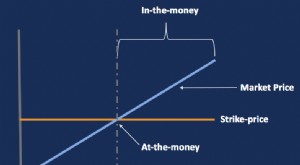
Calculating the max pain is time-consuming arithmetic that sums up the outstanding put and call dollar value of each in the in-the-money strike price. Here are the steps of calculating max pain:
- Find the difference in strike priceStrike PriceThe strike price is the price at which the holder of the option can exercise the option to buy or sell an underlying security, depending on and stock price.
- Find the product of the results and open interest at the strike price.
- Sum up the dollar value for the put and call at the strike price.
- For each strike price, repeat the steps.
- The strike price with the highest value is equivalent to the price of max pain.
Using the max pain as a trading tool is complex, given that the max pain price fluctuates hourly or daily. Thus, it is important to note that when the difference between the max pain price and the current stock price bears a large value.
The rationale behind such an idea is that there could be a tendency for the stock price to vacillate around the max pain, but until the expiration approaches, the effects may be meaningless.
Practical Examples
Assume that Company XYZ Limited wants to trade its stock options when options of the stock are trading at a strike price of $51. In such a case, there is a significant open interest on the stock options at strike options between $54 and $55. Ultimately, the max pain price will settle at either of the two prices, since they will render the maximum values of the company’s stock options to expire worthless.
In a second example to illustrate the concept, consider Company X with several contracts that traded on its stock, with the majority at a strike price of $50. Suppose that during the expiration time, the company’s stocks were trading at $50. It means that any strike price of $50 would be in the in-the-money, and hence will expire worthless.
The idea is that any given security’s max price at an expiration dateExpiration Date (Derivatives)The expiration date refers to the date in which options or futures contracts expire. It is the last day of the validity of the derivatives contract. can be predicted with reasonable accuracy to determine when to sell options for profit. This concept works best under normal trading conditions.
Additional Resources
CFI is the official provider of the global Commercial Banking & Credit Analyst (CBCA)™Program Page - CBCAGet CFI's CBCA™ certification and become a Commercial Banking & Credit Analyst. Enroll and advance your career with our certification programs and courses. certification program, designed to help anyone become a world-class financial analyst. To keep advancing your career, the additional CFI resources below will be useful:
- At The MoneyAt The Money (ATM)At the money (ATM) describes a situation when the strike price of an option is equal to the underlying asset's current market price. It is a concept of
- Downside RiskDownside RiskDownside risk refers to the probability that an asset or security will fall in price. It is the potential loss that could result from a fall
- HedgingHedgingHedging is a financial strategy that should be understood and used by investors because of the advantages it offers. As an investment, it protects an individual’s finances from being exposed to a risky situation that may lead to loss of value.
- Options: Calls and PutsOptions: Calls and PutsAn option is a derivative contract that gives the holder the right, but not the obligation, to buy or sell an asset by a certain date at a specified price.
-

Understanding Dirty Price: Bond Pricing Explained
Dirty price is when a bond price includes interest that has accrued since the latest coupon payment. When investors buy fixed-income securities, such as bondsBonds vs StocksFor prospective
-
Understanding Exercise Price in Options Trading
The exercise price within an option is the price at which the holder is capable of purchasing the underlying asset. If the market price of the asset is above the exercise price, the holder is capable
invest
- Understanding Divergence in Technical Analysis: A Guide
- Understanding Forward Prices: Definition & How They Work
- Understanding Hedging Strategies: A Comprehensive Guide
- Understanding Options: A Guide to Calls and Puts
- Sell to Open Options: A Comprehensive Guide
- Understanding Slippage in Trading: Causes & Impact
- Understanding Strangle Options: A Comprehensive Guide
- Understanding Volatility: A Key Indicator of Investment Risk
- Options Trading Explained: Risks & Rewards for Investors
-
 Understanding Delta: A Key Risk Measure in Derivatives
Delta is a risk sensitivity measure used in assessing derivativesDerivativesDerivatives are financial contracts whose value is linked to the value of an underlying asset. They are complex financial in...
-
 Understanding Digital Options: A Comprehensive Guide for Traders
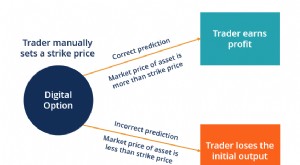
A digital option is a form of option that allows traders to manually set a strike price. The digital option provides the traders with a fixed payout in the case when the market price of the underlying...