
Synthetic Long Assets: Strategy, Risks & Rewards
Sometimes referred to as a synthetic long stock, a synthetic long asset is a strategy for options trading that is designed to mimic a long stock position. Traders create a synthetic long asset by purchasing at-the-money (ATM) calls and then selling an equivalent number of ATM puts with the same date of expiration.
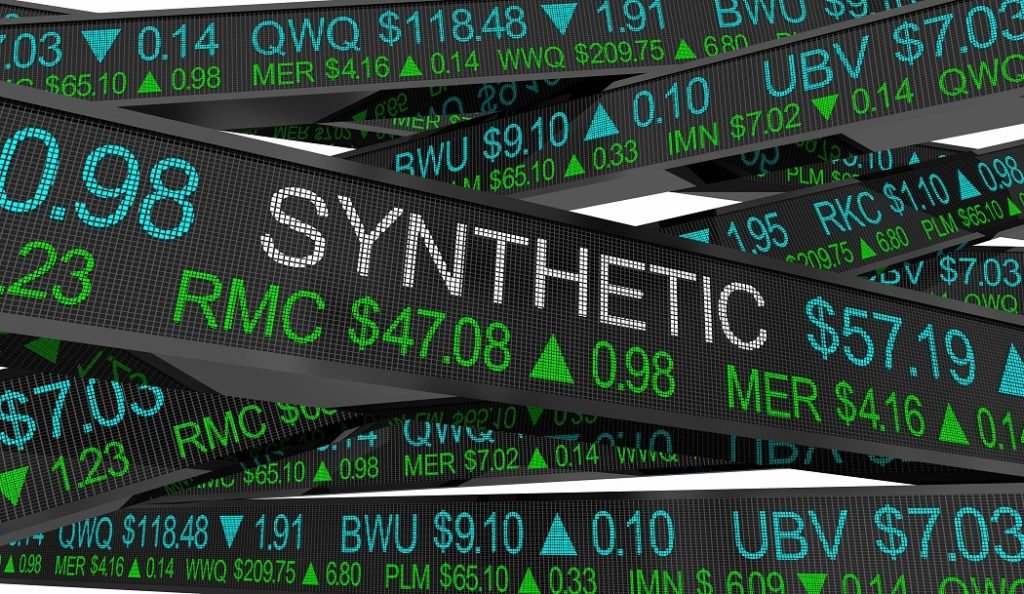
Synthetic long assets come with an unlimited amount of risk; however, they also offer an unlimited potential profit. The synthetic long asset position is a more cost-effective way to trade without tying up all the investment capital required to buy an equivalent number of shares of the underlying stock outright. It can be created with a very small amount of capital because the cost of the call optionsCall OptionA call option, commonly referred to as a "call," is a form of a derivatives contract that gives the call option buyer the right, but not the obligation, to buy a stock or other financial instrument at a specific price - the strike price of the option - within a specified time frame. is at least partially offset by the money received for selling the put options.
Summary:
- Synthetic positions (which includes synthetic long assets) are created using a combination of financial instruments – typically options – to mirror the same investment as an underlying asset.
- Traders create synthetic long asset positions by buying at-the-money calls and then selling the same number of at-the-money puts; both the calls and the puts should have the same expiration date.
- Just like a long stock position, synthetic long assets come with unlimited potential for profit or for loss (risk).
Synthetic Positions
In order to better understand a synthetic long asset, it is first important to understand synthetic positions.
Synthetic positions are formed by using multiple financial instruments in place of a single, other financial instrument or asset. It is done, typically, by buying or selling derivatives of underlying financial instruments such as optionsOptions: Calls and PutsAn option is a derivative contract that gives the holder the right, but not the obligation, to buy or sell an asset by a certain date at a specified price.. When the multiple instruments are combined, a synthetic position is created that essentially mimics the value of the underlying asset. Synthetic positions are most commonly created for equity market investments (stocks).
Advantages of Synthetic Positions
The primary and most important advantage of synthetic positions – versus buying stocks or selling short – is that the cost or margin requirement for the synthetic position is less than that of making an outright investment in the underlying asset.
A key distinction of synthetic positions is that they don’t involve dividend paymentsDividend PolicyA company’s dividend policy dictates the amount of dividends paid out by the company to its shareholders and the frequency with which the dividends are paid. The underlying security may have a dividend; however, with the creation of a synthetic position, traders/investors do not need to calculate dividend payments into their overall profit/loss.
A Double-Edged Sword
Synthetic long assets are double-edged swords because they come with unlimited potential for both profit and loss.
Much like long stock positions, synthetic long assets are not subject to a profit cap. As long as the underlying stock continues to go up, the trader stands to continue making a profit. The equation for profit looks something like this:
PROFIT = Profits realized in call options + Premiums received from the sale of put options – Premiums paid for call options and transaction costs
Profit is earned when the price of the underlying stock rises to higher than the strike priceStrike PriceThe strike price is the price at which the holder of the option can exercise the option to buy or sell an underlying security, depending on of the long call options bought prior to the options’ expiration date. The profit equals the long call options profit, plus the proceeds from the sale of put options, and minus the premiums paid for the call options and any transaction costs.
The other side of the sword is the fact that synthetic long positions come with unlimited potential for risk or loss. Significant losses can occur with synthetic long assets if the price of the underlying asset declines significantly. In such a scenario, the call options (assuming the underlying asset remains below the call option strike price) expire worthless, and being short, the put options expose the investor to potentially unlimited losses.
Because the total price (premium) for the call options purchased may be more than the proceeds received from selling the put options, traders often enter a synthetic long asset position with a debit. It means that even if the underlying stock doesn’t go down – if the price just remains relatively unchanged – the trader will still show a loss in the amount of the debit that was created from entering the position.
More Resources
CFI offers the Financial Modeling & Valuation Analyst (FMVA)™Become a Certified Financial Modeling & Valuation Analyst (FMVA)®CFI's Financial Modeling and Valuation Analyst (FMVA)® certification will help you gain the confidence you need in your finance career. Enroll today! certification program for those looking to take their careers to the next level. To keep learning and advancing your career, the following resources will be helpful:
- Exotic OptionsExotic OptionsExotic options are the classes of option contracts with structures and features that are different from plain-vanilla options (e.g., American or European options). Exotic options are different from regular options in their expiration dates, exercise prices, payoffs, and underlying as
- Futures and ForwardsFutures and ForwardsFuture and forward contracts (more commonly referred to as futures and forwards) are contracts that are used by businesses and investors to hedge against risks or speculate.
- Long and Short PositionsLong and Short PositionsIn investing, long and short positions represent directional bets by investors that a security will either go up (when long) or down (when short). In the trading of assets, an investor can take two types of positions: long and short. An investor can either buy an asset (going long), or sell it (going short).
- Trading MechanismsTrading MechanismsTrading mechanisms refer to the different methods by which assets are traded. The two main types of trading mechanisms are quote driven and order driven trading mechanisms
-
Asset Management Companies (AMCs): A Comprehensive Guide
An asset management company (AMC) is a firm that invests a pooled fund of capital on behalf of its clients. The capital is used to fund different investments in various asset classesAsset ClassAn asse
-
Strategic Asset Allocation (SAA): A Comprehensive Guide
Strategic asset allocation refers to a long-term portfolio strategy that involves choosing asset class allocations and rebalancing the allocations periodically. Rebalancing occurs when the asset alloc
invest
- Asset Swap Explained: Definition, OTC Trading & Key Concepts
- Basis Trading: Definition, Strategy & How It Works
- Dispersion Explained: Understanding Data Spread and Investment Risk
- Long Strangle Options Strategy: Definition & How It Works
- Synthetic Cash: Understanding Simulated Financial Instruments
- Synthetic Positions in Trading: Definition & How They Work
- Understanding Underlying Assets: Definition & Importance
- Understanding Leases: Types, Classifications, and Key Concepts
- Synthetix: A Decentralized Platform for Synthetic Asset Trading
-
 Understanding Analyst Recommendations: Investment Insights & Advice
Analyst recommendations are recommendations and advice given by financial analysts and investment researchers to their clients with regards to what assets to invest in and what assets not to invest in...
-
 Understanding Asset Classes: A Comprehensive Guide
An asset class is a group of similar investment vehicles. Different classes, or types, of investment assets – such as fixed-income investmentsFixed Income Bond TermsDefinitions for the most comm...