
Understanding Business Erosion: Causes, Risks & Prevention
Erosion is broadly defined as any negative impact that is directed towards an organization’s sales, profits, or assets. It is a risk factor that must be taken into consideration, especially when considering the company lifecycle or the economic market cycle.
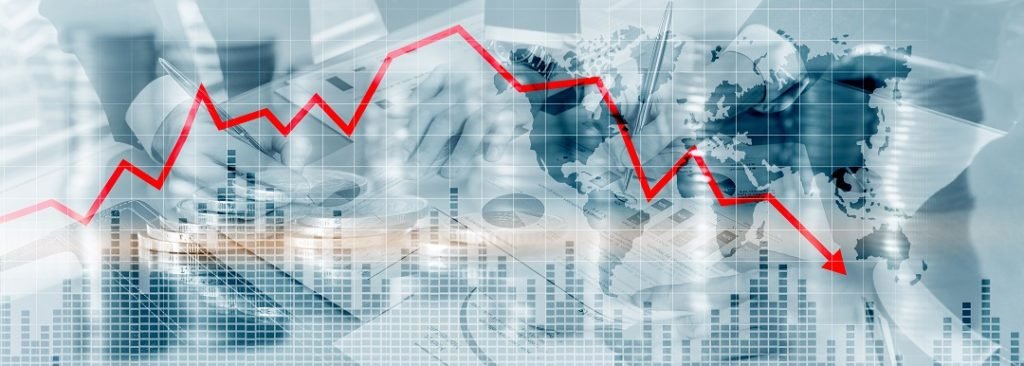
Understanding Erosion
Erosion is not a specific term, but as mentioned before, it is broadly defined as any downward trend that occurs to a company’s operations. In order for the downward trend to be considered erosion, it must be a longer-term, persisting trend. The three types of erosion are:
1. Revenue Erosion
Revenue erosion occurs when there is a steady, long-term downwards trend of sales for a company. Revenue is the inflow of money that occurs from operating a business before deducting any expenses.
Revenue erosion can occur for many different reasons. Some examples are:
- Products becoming obsolete due to new technological advancements
- New competition taking away market share for a company
- Current competition undercutting prices to take away market share for a company
- Reduced overall demand for a company’s product and service
For sales erosion to be evident, the downwards trend should be persistent over a long timeframe and not just observed in the short term.
2. Profit Erosion
Profit erosion occurs when there is a steady, long-term downwards trend of income for a company.
Profit is the amount of inflows of money that is left over after deducting all expenses – such as expenses incurred to manufacture or deliver products, selling, general & administrative (SG&A)SG&ASG&A includes all non-production expenses incurred by a company in any given period. It includes expenses such as rent, advertising, marketing expenses, interest expenses, depreciation & amortization expenses, tax expenses, and other unusual expenses such as litigation expenses or losses on disposal of assets, etc.
Profit erosion can occur for many different reasons. Some examples are:
- Revenue erosion (as mentioned above)
- Investment in unprofitable projects
- Expenses increasing over time (that are unable to be passed through to customers in terms of price increases)
The distinguishable factor between profit erosion and revenue erosion is that the former can be directly observed in the trend of profit margins for a company. If profit marginsProfit MarginIn accounting and finance, profit margin is a measure of a company's earnings relative to its revenue. The three main profit margin metrics are decreasing over time, profit erosion is likely occurring. It means that even if revenue is stable or even increasing, profit erosion could still be occurring from increases in expenses.
Some examples of increased expenses are:
- Increased interest expenses from a greater debt burden
- Increased direct material costs
- Increased direct labor costs
The above examples result in profit erosion if they cannot be passed through to customers via price increases. For the phenomenon to be evident, the downwards trend should be persistent over a long timeframe, and not just observed in the short term.
3. Asset Erosion
Asset erosion can be classified into three forms:
Tangible Asset Erosion
Tangible asset erosion refers to the loss of value of tangible assets over time. Tangible assets are assets that can be physically observed and touched. Examples include:
- Machinery
- Equipment
- Vehicles
- Buildings
Most tangible assets come with a useful life and wear out over time, and it is captured in accounting with “depreciation.” For example, a vehicle will usually have a finite useful life based on the distance driven or years being used.
Some examples of tangible asset erosion are:
- Technological advances making assets obsolete
- Accelerated depreciation due to overuse of an asset
Intangible Asset Erosion
Intangible asset erosion refers to the loss of value of intangible assets over time. Intangible assets are assets that cannot be physically observed and touched. Examples include:
- Patents
- Trademarks
- GoodwillGoodwillIn accounting, goodwill is an intangible asset. The concept of goodwill comes into play when a company looking to acquire another company is
- Brand value
Some intangible assets come with a useful life – for example, patents may expire over time. It is captured in accounting with “amortization.” However, generally, intangible assets possess an indefinite life, and their value is tested for impairment periodically.
If an intangible asset is deemed to have been impaired, then its value is marked down. If markdowns of intangible assets persist over time, it is considered intangible asset erosion.
Financial Asset Erosion
Financial asset erosion refers to the loss of value of financial assets over time. Financial assets are instruments and securities held for financial purposes. Either speculating for a gain or hedging to protect against downside risks. Some examples of financial assets are:
- Equity securities
- Fixed-income securities
- DerivativesDerivativesDerivatives are financial contracts whose value is linked to the value of an underlying asset. They are complex financial instruments that are
Equity securities are relatively volatile over time, so it is difficult to observe a long-term, persisting downward trend in values. It is also difficult to observe a long-term downwards trend of value in fixed-income securities as well.
Financial asset erosion is most commonly observed in options, which are derivative instruments. Options contracts come with a specified expiration date in which the option cannot be exercised past that specified date. Because of the fact, the value of the option erodes over time, eventually reaching zero at the expiration.
Related Readings
CFI is the official provider of the global Capital Markets & Securities Analyst (CMSA)™Program Page - CMSAEnroll in CFI's CMSA® program and become a certified Capital Markets &Securities Analyst. Advance your career with our certification programs and courses. certification program, designed to help anyone become a world-class financial analyst. To keep advancing your career, the additional CFI resources below will be useful:
- Direct CostDirect CostDirect cost is an accounting term that describes any type of expenditure that can be directly attributable to a cost object. Cost objects can
- Economic DepressionEconomic DepressionAn economic depression is an occurrence wherein an economy is in a state of financial turmoil, often the result of a period of negative activity based on the country’s Gross Domestic Product (GDP) rate. It is a lot worse than a recession, with GDP falling significantly, and usually lasts for many years.
- Depreciation MethodsDepreciation MethodsThe most common types of depreciation methods include straight-line, double declining balance, units of production, and sum of years digits.
- Expiration DateExpiration Date (Derivatives)The expiration date refers to the date in which options or futures contracts expire. It is the last day of the validity of the derivatives contract.
-
Understanding Accrued Expenses: A Comprehensive Guide
Accrued expenses are expenses that are recognized at the time they are incurred, even though cash has not yet been paid. These expensesFixed and Variable CostsCost is something that can be classified
-
Understanding the Income Statement: A Comprehensive Guide
The Income Statement is one of a company’s core financial statements that shows their profit and lossProfit and Loss Statement (P&L)A profit and loss statement (P&L), or income statement
finance
- Understanding Discretionary Expenses: Definition & Examples
- Understanding Schedule A: Itemized Deductions Explained
- Tax Deductions: Understanding and Claiming Benefits
- Understanding Accruals in Accounting: A Comprehensive Guide
- Understanding Administrative Expenses: A Comprehensive Guide
- Understanding Business Expenses: A Comprehensive Guide
- Understanding Maintenance Expenses: A Comprehensive Guide
- Understanding Net Loss: Causes, Impact, and Accounting Principles
- Understanding Operating Expenses (OPEX): A Comprehensive Guide
-
 Understanding Accounts Expenses: A Comprehensive Guide
An expense in accounting is the money spent, or costs incurred, by a business in their effort to generate revenues. Essentially, accounts expenses represent the cost of doing business; they are the su...
-
 Accrued Expenses: Definition, Examples & Accounting Explained
Accrued expense is a concept in accrualAccrual AccountingIn financial accounting, accruals refer to the recording of revenues that a company has earned but has yet to receive payment for, and the acco...