
Understanding Forced Sale Value: A Business Valuation Guide
A forced sale value is the estimate of the amount that a business would receive if it sold off its assets one piece at a time during an unforeseen or uncontrollable event. The appraiser assumes that the business needs to sell its assets within a short duration at an immediate auctionAuctionAn auction is a system of buying and selling goods or services by offering them for bidding, allowing people to bid, and selling to the highest bidder. The bidders compete against each other.
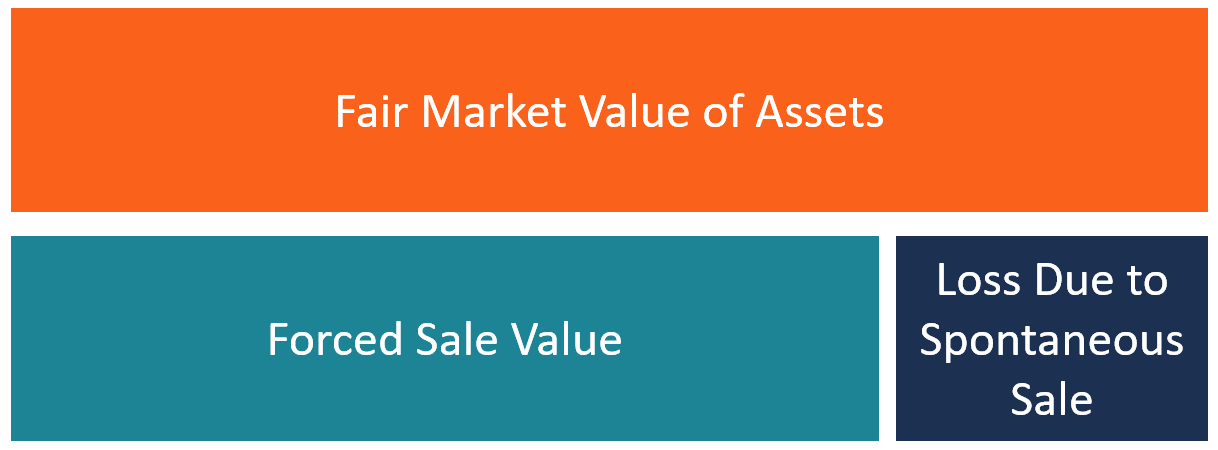
The rush factor means that the business will end up accepting less compensation for the item on sale than it would under normal business conditions. A forced sale is carried out in response to an economic eventSystematic RiskSystematic risk is that part of the total risk that is caused by factors beyond the control of a specific company or individual. Systematic risk is caused by factors that are external to the organization. All investments or securities are subject to systematic risk and therefore, it is a non-diversifiable risk., legal order, or changes in regulations.
The Forced Sale of Securities
When trading securitiesMarketable SecuritiesMarketable securities are unrestricted short-term financial instruments that are issued either for equity securities or for debt securities of a publicly listed company. The issuing company creates these instruments for the express purpose of raising funds to further finance business activities and expansion. on margin, brokerage firms require their customers to observe margin requirements. This means that the clients must maintain their margins above the company’s requirements. In the event the account drops in value below the minimum margin requirement, the broker will issue a margin call to the client. The margin call informs them that the account is under-margined and they should deposit more funds into the account or sell some of their securities to raise the margin.
If the client fails to meet the margin requirement after receiving the warning, the broker has the right to force-liquidate the securities. They may achieve the liquidation by closing and selling off all open positions. Brokers resort to forced liquidation to protect themselves from possible losses resulting from the margined accounts. If they don’t sell off the current positions, they will be exposed to declining value investments and, hence, may incur losses on those accounts.
How to Determine Forced Sale Value
When determining the amount that a business would fetch in a forced sale, an appraiser estimates the amount that each asset owned by the business would cost if they were to be sold at an auction. The auction is based on a short timeframe of about 60-90 days, which only attracts a small pool of buyers. The appraiser then sums up the estimated value of all assetsTypes of AssetsCommon types of assets include current, non-current, physical, intangible, operating, and non-operating. Correctly identifying and to arrive at the total forced sale value. The value represents the minimum value that the business would get if it were to sell all its assets at an auction.
When Forced Sale Value is Preferred
There are certain instances when using forced sale value is a good idea for a business. One of these instances is when the business is troubled and needs to obtain capital within a short time. The business will sell its machinery and equipment as-is, without having to repair or service them for resale. The buyers will purchase the assets at a price that is below the fair market value, with the plan of using them in their own businesses or servicing them and re-selling them at a higher price.
The forced sale valuation method would, however, not be ideal for a healthy business that is disposing of its assets. The business can prolong the auction period to attract a larger pool of buyers who would be willing to pay more for an asset that’s been serviced and is in mint condition. Also, prolonging the auction period gives the business more time to repair and service the assets to increase their valuation.
Orderly Liquidation Value vs. Forced Sale Value vs. Fair Market Value
Apart from using the forced sale valuation, appraisers may also use alternative methods of valuation such as fair market value and orderly liquidation value.
Orderly Liquidation Value
The orderly liquidation value is based on the assumption that the seller has a reasonable amount of time to sell an asset to the highest bidder. The seller uses a channel of sale with the largest pool of buyers with the ability to buy the asset at a relatively higher rate.
Forced Sale Value
With the forced sale value, the seller is under coercion to sell off the equipment, buildings, and other assets. The buyer takes advantage of the seller’s economic event to force the sale of the assets within a short duration, and the practice attracts reduced sales value compared to the other methods. Due to the urgency associated with the forced sale method, the value of the assets is usually lower than the fair market value and the orderly liquidation value.
Fair Market Value
On the other hand, fair market value refers to the value that the business would get if it sold its assets at a fair market price. It based on the assumption that the asset is being sold in the open market, and that neither the seller or the buyer is being forced into the transaction.
Comparing the three valuation methods, the forced sale method fetches the lowest value, followed by the orderly liquidation method, whereas the fair market value method offers the highest value, since the assets are sold in the open market and are accessible by a large number of buyers.
Related Readings
Thank you for reading CFI’s explanation of forced sale value. CFI is the official provider of the global Financial Modeling & Valuation Analyst (FMVA)™Become a Certified Financial Modeling & Valuation Analyst (FMVA)®CFI's Financial Modeling and Valuation Analyst (FMVA)® certification will help you gain the confidence you need in your finance career. Enroll today! certification program, designed to help anyone become a world-class financial analyst. To keep advancing your career, the additional CFI resources below will be useful:
- Depreciation MethodsDepreciation MethodsThe most common types of depreciation methods include straight-line, double declining balance, units of production, and sum of years digits.
- Negotiated SaleNegotiated SaleA negotiated sale is a technique of offering bonds where the issuing entity and an interested underwriter negotiate the terms of the sale with the buyer. It is sometimes preferred over competitive bidding due to its speed, flexibility, efficiency, and level of confidentiality between the issuer and the underwriter.
- PP&E (Property, Plant and Equipment)PP&E (Property, Plant and Equipment)PP&E (Property, Plant, and Equipment) is one of the core non-current assets found on the balance sheet. PP&E is impacted by Capex,
- Sale and Purchase AgreementSale and Purchase AgreementThe Sale and Purchase Agreement (SPA) represents the outcome of key commercial and pricing negotiations. In essence, it sets out the agreed elements of the deal, includes a number of important protections to all the parties involved and provides the legal framework to complete the sale of a property.
-

Understanding Market Capitalization: A Comprehensive Guide
Market Capitalization (Market Cap) is the most recent market value of a company’s outstanding sharesWeighted Average Shares OutstandingWeighted average shares outstanding refers to the numb
-

Understanding Market Value of Debt: Beyond Book Value
The Market Value of Debt refers to the market price investors would be willing to buy a company’s debt for, which differs from the book value on the balance sheet. A company’s debt doesn&r
finance
- Understanding Financial Denomination: A Comprehensive Guide
- Understanding Equity: A Comprehensive Guide for Investors
- Face Value Explained: Definition, Examples & Importance
- Understanding Fair Value: Definition & Importance
- Understanding Money: Definition, History & Value
- Nominal Value Explained: Definition & Financial Significance
- Understanding Value Added: Definition & Business Applications
- What is Value Date?
- Ex-Post Analysis: Understanding Outcomes After Events
-
 Gross Merchandise Value (GMV): Definition & Importance
Gross Merchandise Value (GMV), also referred to as gross merchandise volume, is the total amount of sales a company makes over a specified period of time, typically measured quarterly or yearly. GMV i...
-
 Initial Outlay: Definition, Examples & Business Implications
An initial outlay refers to the initial investments needed in order to begin a given project. For instance, if opening a new factory, a company would need to purchase new land and machinery in order t...