
Loan-to-Value (LTV) Ratio: Understanding Risk & Home Equity
The loan-to-value (LTV) ratio is a financial ratio that compares the size of a loan to the value of an asset that is purchased using the proceeds of the loan. The LTV ratio is an important metric that assesses the lending risk that a lender carries by providing the loan to a borrower.
The value of an asset is generally determined either by independent appraisers or the most recent purchase price of an asset. Commonly, when both values are known, a lender will choose the lesser of the two values.
Importance of the Loan-to-Value Ratio
Generally, a high LTV ratio indicates a high level of lending risk. The rationale behind this is that the purchased property (e.g., house) in the mortgageMortgageA mortgage is a loan – provided by a mortgage lender or a bank – that enables an individual to purchase a home. While it’s possible to take out loans to cover the entire cost of a home, it’s more common to secure a loan for about 80% of the home’s value. is used as collateral. Thus, the LTV ratio essentially compares the size of the loan requested to the size of the pledged collateralCollateralCollateral is an asset or property that an individual or entity offers to a lender as security for a loan. It is used as a way to obtain a loan, acting as a protection against potential loss for the lender should the borrower default in his payments..
Due to the abovementioned reason, the assessment of the LTV ratio serves a crucial role in mortgage underwriting. For example, conventional mortgage lenders usually provide good loan terms if the LTV ratio is less than 80%.
For applicants whose LTV ratio exceeds 80% but is still below 100%, loans can still be provided if the applicant possesses a strong credit historyFICO ScoreA FICO score, more commonly known as a credit score, is a three-digit number that is used to assess how likely a person is to repay the credit if the individual is given a credit card or if a lender loans them money. FICO scores are also used to help determine the interest rate on any credit extended. However, the loan terms will likely include higher interest rates and will require the purchase of private mortgage insurance (PMI). Loans with an LTV ratio above 100% are likely to be rejected.
Formula for the Loan-to-Value Ratio
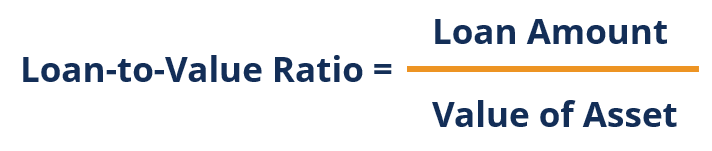
The general formula for calculating the loan-to-value ratio is:
Example of Loan-to-Value Ratio
Sam is applying for a mortgage from a bank to buy a new house. He needs to borrow $500,000. However, the bank wants to assess the risks associated with the loan by calculating the loan-to-value ratio.
An independent appraiser’s determined that the current value of the house that Sam wants to purchase is $700,000. Therefore, the loan-to-value ratio of the mortgage is:

The loan-to-value ratio of 71% is generally considered to carry a relatively low risk to the lender. Thus, the bank is likely to approve Sam’s mortgage application.
More Resources
CFI offers the Financial Modeling & Valuation Analyst (FMVA)™Become a Certified Financial Modeling & Valuation Analyst (FMVA)®CFI's Financial Modeling and Valuation Analyst (FMVA)® certification will help you gain the confidence you need in your finance career. Enroll today! certification program for those looking to take their careers to the next level. To keep learning and advancing your career, the following CFI resources will be helpful:
- Cost of DebtCost of DebtThe cost of debt is the return that a company provides to its debtholders and creditors. Cost of debt is used in WACC calculations for valuation analysis.
- Debt ScheduleDebt ScheduleA debt schedule lays out all of the debt a business has in a schedule based on its maturity and interest rate. In financial modeling, interest expense flows
- Leverage RatiosLeverage RatiosA leverage ratio indicates the level of debt incurred by a business entity against several other accounts in its balance sheet, income statement, or cash flow statement. Excel template
- Loan CovenantLoan CovenantA loan covenant is an agreement stipulating the terms and conditions of loan policies between a borrower and a lender. The agreement gives lenders leeway in providing loan repayments while still protecting their lending position. Similarly, due to the transparency of the regulations, borrowers get clear expectations of
-

Loan Life Coverage Ratio (LLCR): Definition & Importance
The Loan Life Coverage Ratio (LLCR) is a metric used to gauge the ability of a project to completely cover its debt obligations. The LLCR is a very commonly used ratio to assess the potential risks of
-
Treynor Ratio: Understanding Risk-Adjusted Portfolio Performance
The Treynor Ratio is a portfolio performance measure that adjusts for systematic riskSystematic RiskSystematic risk is that part of the total risk that is caused by factors beyond the control of a spe
finance
- Reverse Mortgage LTV: Understanding Loan-to-Value Ratios
- Acid-Test Ratio: Understanding Your Company's Short-Term Liquidity
- Advertising to Sales Ratio: Measuring Ad Effectiveness & ROI
- Current Ratio: Definition, Calculation & Financial Health
- Operating Ratio: Definition, Calculation & Importance
- Quick Ratio: Understanding Your Business's Short-Term Liquidity
- Reserve Ratio Explained: Understanding Bank Reserves
- Understanding the Retention Ratio: Reinvesting for Growth
- Sharpe Ratio: Calculate & Interpret Investment Performance
-
 Inventory Turnover Ratio: Definition & Calculation
The inventory turnover ratio, also known as the stock turnover ratio, is an efficiency ratio that measures how efficiently inventoryInventoryInventory is a current asset account found on the bala...
-
![Shareholder Equity Ratio: Definition & Calculation | [Your Company Name]](https://www.etffin.com/article/uploadfiles/202110/2021100815180064_S.png) Shareholder Equity Ratio: Definition & Calculation | [Your Company Name]
Shareholder Equity Ratio: Definition & Calculation | [Your Company Name]The shareholder equity ratio is a ratio that shows the amount of a company’s assets that have been financed using the owner’s equity instead of debt. It shows the portion of shareholders&r...