
Solvency Ratio: Understanding a Company's Financial Stability
A solvency ratio is a performance metric that helps us examine a company’s financial health. In particular, it enables us to determine whether the company can meet its financial obligations in the long term.

The metric is very useful to lendersLenderA lender is defined as a business or financial institution that extends credit to companies and individuals, with the expectation that the full amount of, potential investors, suppliers, and any other entity that would like to do business with a particular company. It usually compares the entity’s profitability with its obligations to determine whether it is financially sound. In that regard, a higher or strong solvency ratio is preferred, as it is an indicator of financial strength. On the other hand, a low ratio exposes potential financial hurdles in the future.
Summary
- The solvency ratio helps us assess a company’s ability to meet its long-term financial obligations.
- To calculate the ratio, divide a company’s after-tax net income – and add back depreciation– by the sum of its liabilities (short-term and long-term).
- A high solvency ratio shows that a company can remain financially stable in the long term.
How to Calculate the Solvency Ratio
As explained later, there are a couple of other ways to determine a company’s solvency, but the main formula for calculating the solvency ratio is as follows:
Solvency Ratio = (Net Income + Depreciation) / All Liabilities (Short-term + Long-term Liabilities)
If you examine keenly, you will notice that the numerator comprises the entity’s current cash flow, while the denominator is made up of its liabilities. Thus, it is safe to conclude that the solvency ratio determines whether a company’s cash flow is adequate to pay its total liabilities.
Practical Example
Let’s look at the case of SaleSmarts Co.:
SaleSmarts (USD in millions)Net Income45,000Depreciation15,000Short-term Liabilities83,000Long-term Liabilities160,000
Solvency Ratio = (45,000 + 15,000) / (83,000 + 160,000)
Solvency Ratio = 0.246 * 100 = 24.6%
Important to note is that a company is considered financially strong if it achieves a solvency ratio exceeding 20%. So, from our example above, it is clear that if SalesSmarts keeps up with the trend each year, it can repay all its debts within four years (100% / 24.6% = Approximately four years).
Limitation of the Solvency Ratio
Although the solvency ratio is a useful measure, there is one area where it falls short. It does not factor in a company’s ability to acquire new funding sources in the long term, such as funds from stock or bonds. For such a reason, it should be used alongside other types of analysis to provide a comprehensive overview of a business’ solvency.
Other Solvency Ratios
Financial ratios enable us to draw meaningful comparisons regarding an organization’s long-term debt as it relates to its equity and assets. Use of ratios allows interested parties to assess the stability of the company’s capital structureCapital StructureCapital structure refers to the amount of debt and/or equity employed by a firm to fund its operations and finance its assets. A firm's capital structure. Here a few more ratios used to evaluate an organization’s capability to repay debts in the future.
1. Debt-to-Equity (D/E) Ratio
Often abbreviated as D/E, the debt-to-equity ratioDebt to Equity RatioThe Debt to Equity Ratio is a leverage ratio that calculates the value of total debt and financial liabilities against the total shareholder’s equity. establishes a company’s total debts relative to its equity. To calculate the ratio, first, get the sum of its debts. Divide the outcome by the company’s total equity. This is used to measure the degree to which a company is using debt to fund operations (leverage).
2. Interest Coverage Ratio
With the interest coverage ratio, we can determine the number of times that a company’s profits can be used to pay interest charges on its debts. To calculate the figure, divide the company’s profits (before subtracting any interests and taxes) by its interest payments.
The higher the value, the more solvent the company. In other words, it means the day-to-day operations are yielding enough profit to meet its interest payments.
3. Debt-to-Capital Ratio
As implied in the name, the debt-to-capital ratio determines the proportion of a business’ total capital that is financed using debt. For example, if a company’s debt-to-capital ratio is 0.45, it means 45% of its capital comes from debt. In such a case, a lower ratio is preferred, as it implies that the company can pay for capital without relying so much on debt.
Wrap Up
Before an individual or organization invests or lends money to a company, they need to be sure that the entity in question can remain solvent over time. Thus, interested stakeholders utilize solvency ratios to assess a company’s capacity to pay off its debts in the long term.
A high solvency ratio is an indication of stability, while a low ratio signals financial weakness. To get a clear picture of the company’s liquidity and solvency, potential investors use the metric alongside others, such as the debt-to-equity ratio, the debt-to-capital ratio, and more.
More Resources
CFI is the official provider of the global Commercial Banking & Credit Analyst (CBCA)™Program Page - CBCAGet CFI's CBCA™ certification and become a Commercial Banking & Credit Analyst. Enroll and advance your career with our certification programs and courses. certification program, designed to help anyone become a world-class financial analyst. To keep advancing your career, the additional CFI resources below will be useful:
- Analysis of Financial StatementsAnalysis of Financial StatementsHow to perform Analysis of Financial Statements. This guide will teach you to perform financial statement analysis of the income statement,
- Capital StructureCapital StructureCapital structure refers to the amount of debt and/or equity employed by a firm to fund its operations and finance its assets. A firm's capital structure
- Financial RatiosFinancial RatiosFinancial ratios are created with the use of numerical values taken from financial statements to gain meaningful information about a company
- InsolvencyInsolvencyInsolvency refers to the situation in which a firm or individual is unable to meet financial obligations to creditors as debts become due. Insolvency is a state of financial distress, whereas bankruptcy is a legal proceeding.
-
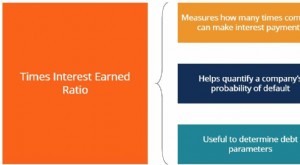
Times Interest Earned (TIE) Ratio: Calculation & Interpretation
The Times Interest Earned (TIE) ratio measures a company’s ability to meet its debt obligations on a periodic basis. This ratio can be calculated by dividing a company’s EBITEBIT GuideEBIT
-

Receivables Turnover Ratio: Definition, Calculation & Importance
Receivables turnover ratio is a financial metric that is used to gauge the effectiveness of a company to offer credit and collect the money that it is owed. This ratio is calculated by taking th
finance
- Accounts Receivable to Sales Ratio: Definition & Analysis
- Acid-Test Ratio: Understanding Your Company's Short-Term Liquidity
- Asset Turnover Ratio: Definition & Calculation - Financial Analysis
- Debt-to-Asset Ratio: Definition, Calculation & Significance
- Defensive Interval Ratio (DIR): Understanding Company Liquidity
- Understanding the Envy Ratio in Private Equity
- Equity Ratio: Understanding Financial Leverage & Risk
- Net Debt to EBITDA Ratio: Understanding Company Solvency
- Solvency Explained: Understanding Long-Term Debt and Financial Stability
-
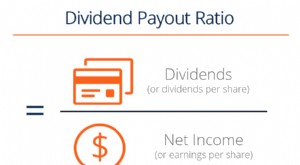 Dividend Payout Ratio (DPR): Understanding & Calculation
The Dividend Payout Ratio (DPR) is the amount of dividends paid to shareholders in relation to the total amount of net incomeNet IncomeNet Income is a key line item, not only in the income statement, ...
-
 Understanding Stocks: A Beginner's Guide to Share Ownership
When a person owns stock in a company, the individual is called a shareholder and is eligible to claim part of the company’s residual assets and earnings (should the company ever have to dissolv...