
Understanding the Yield Gap: Bonds vs. Stocks
The Yield Gap is the difference between the yields of government-issued securitiesBond IssuersThere are different types of bond issuers. These bond issuers create bonds to borrow funds from bondholders, to be repaid at maturity. and the average dividend yield on stock shares. In other words, the yield gap, or the yield gap ratio, is the ratio of the dividend yield on equity StockWhat is a stock? An individual who owns stock in a company is called a shareholder and is eligible to claim part of the company’s residual assets and earnings (should the company ever be dissolved). The terms "stock", "shares", and "equity" are used interchangeably.compared to the yield on long-term government bonds.
The yield gap is calculated to determine whether equity is underpriced or overpriced compared to government bonds. The smaller the yield gap, the lower the equity yield is compared to government bonds, indicating that equity is overpriced. Conversely, the higher the yield gap, the greater the yield on equity is compared to government bonds, indicating that equity is relatively underpriced.
Reverse Yield Gap
The reverse yield gap is the amount by which the yield on bonds exceeds the yield on equity or, in other words, the amount by which the interest on loans and bonds exceeds the cost of equity. The reverse yield gap only applies during those time periods when the average yield from investing in bonds is higher than the average dividend yield on stocks.
Interpretation
A positive yield gap indicates more opportunities to buy in the equity marketsEquity Capital Market (ECM)The equity capital market is a subset of the capital market, where financial institutions and companies interact to trade financial instruments, especially during periods of high inflation. However, when consumer prices are stable, a positive gap is not as strong an indicator because during periods of very low inflation, investors are more inclined to accept lower yields.
A widening gap between bond and equity yields indicates a new growth cycle.
Yield on Equity
The Yield on Equity is the earnings or return on an investment’s equity portion. It is the amount of earnings compared to the amount invested in equity.
#1 Earnings Yield
Earnings Yield is the Earnings per ShareEarnings Per Share (EPS)Earnings per share (EPS) is a key metric used to determine the common shareholder's portion of the company’s profit. EPS measures each common share's profit (EPS) divided by the Market Price Per Share (MPS). Earnings yield shows the percentage of each unit of currency invested in the stock that was earned by a company.
#2 Dividend Yield
The dividend yield is a financial ratio that indicates the amount a company pays out in the form of dividends each year relative to the value of its shares or Market Price Per Share. In other words, the dividend yield is Dividend per Share (DPS) divided by Market Price per Share (MPS).
The dividend yield on stocks is the yield referred to in calculating the yield gap – not the total per share return on equity for a stock investment. The average dividend yield is usually estimated as the average dividend yield of a major stock index, such as the S&P 500 Index.
Yield on Bond
The Yield on Bond is the amount of return an investor realizes on a bond. In other words, the yield on a bond is the amount an investor earns in the form of interest paid to them by the borrower – the issuer of the bond.
Nominal Yield is the interest paid by the issuer of the bond divided by the face value of the bond. The Current Yield is the annual earnings of the bond divided by the current market price of the bond. Required Yield is the minimum yield amount expected by investors as compensation for the risk of investing.
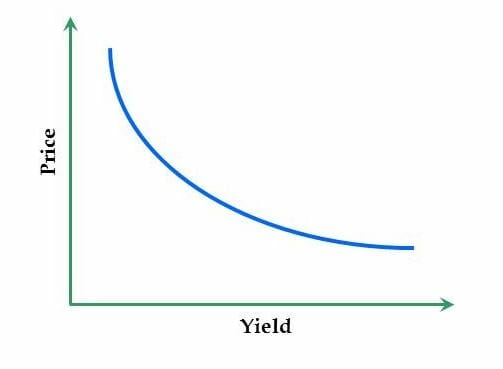
As the price of a bond increases, the yield on a bond falls; as the price of a bond falls, the yield on a bond increases.
Other resources
To keep learning and advancing your career in the financial industry, CFI highly recommends these additional resources:
- Investing: A Beginner’s GuideInvesting: A Beginner's GuideCFI's Investing for Beginners guide will teach you the basics of investing and how to get started. Learn about different strategies and techniques for trading
- Bond PricingBond PricingBond pricing is the science of calculating a bond's issue price based on the coupon, par value, yield and term to maturity. Bond pricing allows investors
- Equity vs Fixed IncomeEquity vs Fixed IncomeEquity vs Fixed Income. Equity and fixed income products are financial instruments that have very important differences every financial analyst should know. Equity investments generally consist of stocks or stock funds, while fixed income securities generally consist of corporate or government bonds.
- Fixed Income TradingFixed Income TradingFixed income trading involves investing in bonds or other debt security instruments. Fixed income securities have several unique attributes and factors that
-

Understanding Horizontal Equity in Taxation
Horizontal equity is an economic theory that is used to assess the fairness of tax burden across a population. The theoretical underpinning of horizontal equity is that the amount of taxes paid should
-
Understanding Inverted Yield Curves: Recession Indicator?
An inverted yield curve often indicates the lead-up to a recession or economic slowdownEconomic DepressionAn economic depression is an occurrence wherein an economy is in a state of financial tur
finance
- Backstop: Understanding Financial Safety Nets and Contingency Funding
- Understanding Equity: A Comprehensive Guide for Investors
- Equity Crowdfunding: A Comprehensive Guide for Startups & Investors
- Understanding Negative Equity: Causes, Risks & Solutions
- Understanding the Yield Gap: Bonds vs. Stocks
- Discount Yield Explained: Calculating Returns on Discounted Bonds
- Understanding Distribution Yield: A Key Metric for REIT & ETF Investors
- Growth Equity: Investing in Expanding Businesses | [Your Company Name]
- Understanding Home Equity: A Comprehensive Guide
-
 Equity Ratio: Understanding Financial Leverage & Risk
The equity ratio is a financial metric that measures the amount of leverage used by a company. It uses investments in assets and the amount of equity to determine how well a company manages its debts ...
-
 Equity Swap Contracts: Definition, Mechanics & Applications
An equity swap contract is a derivative contract between two parties that involves the exchange of one stream (leg) of equity-based cash flows linked to the performance of a stock or an equity indexDo...