
Cash Turnover Ratio (CTR): Calculation & Interpretation
The cash turnover ratio (CTR) is an efficiency ratio that shows the number of times cash is turned over in an accounting periodFiscal Year (FY)A fiscal year (FY) is a 12-month or 52-week period of time used by governments and businesses for accounting purposes to formulate annual. The cash turnover ratio works most effectively for companies that do not offer credit sales.
Formula for the Cash Turnover Ratio
The formula for calculating the cash turnover ratio is as follows:

Where:
- Revenue is a company’s income and can be found on the income statement
- Cash and Cash Equivalents are the most liquid assets on a company’s balance sheet.
Generally, line items taken from the balance sheetBalance SheetThe balance sheet is one of the three fundamental financial statements. The financial statements are key to both financial modeling and accounting. should be averaged. Therefore, cash and cash equivalents should be an average amount of the last accounting period and the current accounting period.
Summary
- The cash turnover ratio is an efficiency ratio that reveals the number of times that cash is turned over in an accounting period.
- The cash turnover ratio is calculated as revenue divided by cash and cash equivalents.
- The cash turnover ratio is ideal for companies that do not offer credit sales.
Example of the Cash Turnover Ratio
It is currently 2014 – John is a business owner looking to gain a better understanding of his company’s cash management on a trended basis (2013-2014) by using the cash turnover ratio. The following is a partial balance sheet and income statement of the company:
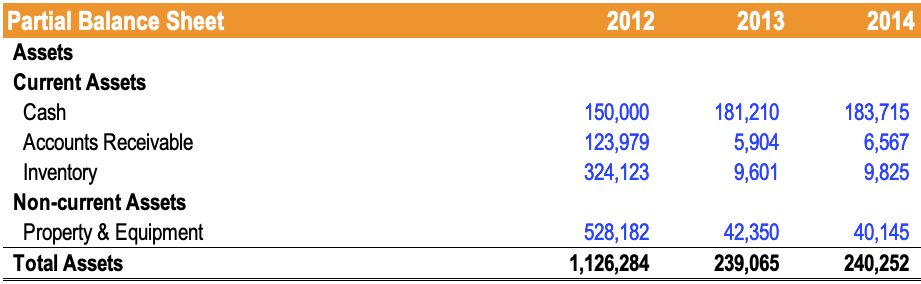
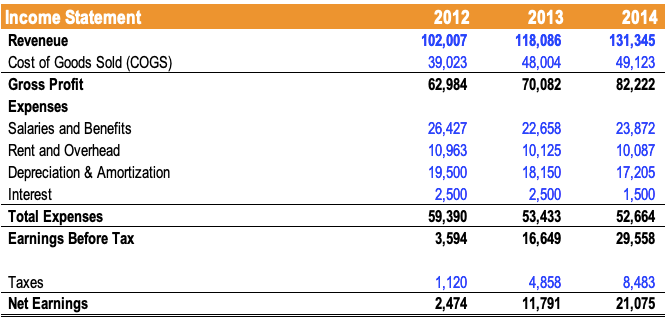
The company’s 2013 cash turnover ratio is calculated as $118,086 / (($150,000 + $181,210) / 2) = 0.71x.
The company’s 2014 cash turnover ratio is calculated as $131,345 / (($181,210 + $183,715) / 2) = 0.72x.
From 2013 to 2014, the company’s cash turnover ratio slightly improved. Therefore, the company’s cash management marginally improved year over year.
Interpreting the Cash Turnover Ratio
The cash turnover ratio indicates how many times a company went through its cash balance over an accounting period and the efficiency of a company’s cash in the generation of revenue. Additionally, the cash turnover ratio is often used by accountantsAccounting Salary GuideIn this accounting salary guide, we give you the midpoint compensation figures for those employed both in public and private accounting. Accountants are responsible for examining financial statements to ensure accuracy and compliance with existing laws and regulations, handling tax-related tasks such as calculating the for budgeting purposes.
A higher cash turnover ratio is desirable, as it indicates a greater frequency of cash replenishment through revenue. However, it is important to note that there is no one ideal cash turnover ratio number. As with other ratios, it should be compared to competitors and industry benchmarks.
Days Cash Replenishment
Extending the cash turnover ratio by dividing 365 by the CTR provides the number of days, on average, that it takes for a company to replenish its cash balance. This formula is as follows:

For example, if a company reports a cash turnover ratio of 2, the days it takes for cash replenishment would be 365 / 2 = 183.
Drawbacks of the Cash Turnover Ratio
The key drawback of the cash turnover ratio is that it does not account for credit salesCredit SalesCredit sales refer to a sale in which the amount owed will be paid at a later date. In other words, credit sales are purchases made by, which are sales made by customers in which the payment is delayed. The cash turnover ratio is most appropriate for companies that do not offer credit sales. Using the cash turnover ratio for companies that offer credit sales skews the CTR by making it larger than it really is.
Additionally, accumulating cash for future acquisitions skews the cash turnover ratio lower. The CTR is best used if the company’s cash balance year-over-year does not see significant changes.
Additional Resources
CFI is the official provider of the global Financial Modeling & Valuation Analyst (FMVA)™Become a Certified Financial Modeling & Valuation Analyst (FMVA)®CFI's Financial Modeling and Valuation Analyst (FMVA)® certification will help you gain the confidence you need in your finance career. Enroll today! certification program, designed to help anyone become a world-class financial analyst. To keep advancing your career, the additional CFI resources below will be useful:
- Asset Turnover RatioAsset Turnover RatioThe asset turnover ratio, also known as the total asset turnover ratio, measures the efficiency with which a company uses its assets to produce sales. A company with a high asset turnover ratio operates more efficiently as compared to competitors with a lower ratio.
- Financial Analysis Ratios GlossaryFinancial Analysis Ratios GlossaryGlossary of terms and definitions for common financial analysis ratios terms. It's important to have an understanding of these important terms.
- Ratio AnalysisRatio AnalysisRatio analysis refers to the analysis of various pieces of financial information in the financial statements of a business. They are mainly used by external analysts to determine various aspects of a business, such as its profitability, liquidity, and solvency.
- Types of BudgetsTypes of BudgetsThere are four common types of budgeting methods that companies use: (1) incremental, (2) activity-based, (3) value proposition, and (4)
-

Understanding the Retention Ratio: Reinvesting for Growth
The retention ratio (also known as the net income retention ratio) is the ratio of a company’s retained income to its net incomeNet IncomeNet Income is a key line item, not only in the income st
-
Sharpe Ratio: Calculate & Interpret Investment Performance
Named after American economist, William Sharpe, the Sharpe Ratio (or Sharpe Index or Modified Sharpe Ratio) is commonly used to gauge the performance of an investment by adjusting for its risk.The hig
finance
- Asset Turnover Ratio: Definition & Calculation - Financial Analysis
- Cash Conversion Ratio (CCR): Definition & Importance
- Cash Flow to Debt Ratio: Understanding and Calculation
- Cash Ratio: Understanding Your Company's Short-Term Liquidity
- Inventory Turnover Ratio: Definition & Calculation
- Understanding the Operating Cash Flow Ratio: A Key Liquidity Metric
- Operating Cash to Debt Ratio: Understanding Financial Health
- Price-to-Cash Flow Ratio (P/CF): Definition & Analysis
- Portfolio Turnover Ratio: Definition, Calculation & Significance
-
 Quick Ratio: Understanding Your Business's Short-Term Liquidity
The Quick Ratio, also known as the Acid-test or Liquidity ratio, measures the ability of a business to pay its short-term liabilities by having assets that are readily convertible into cashCash Equiva...
-
 Reserve Ratio Explained: Understanding Bank Reserves
The reserve ratio – also known as bank reserve ratio, bank reserve requirement, or cash reserve ratio – is the percentage of deposits a financial institution must hold in reserve as cash. ...