
Amortized Bonds: Understanding Principal Repayment
An amortized bond is a bond with the principal amount – otherwise known as face value –regularly paid down over the life of the bond. The bond’s principal is divided up according to the security’s amortization scheduleAmortization ScheduleAn amortization schedule is a table that provides the details of the periodic payments for an amortizing loan. The principal of an amortizing loan is paid and paid off incrementally (often in one-month increments).
Summary
- An amortized bond is a bond with a face value (or par) and interest that is paid down gradually until the bond reaches maturity; bond maturity may range up to 30 years.
- Amortization is a helpful accounting tactic that is considerably beneficial to the company issuing the bond.
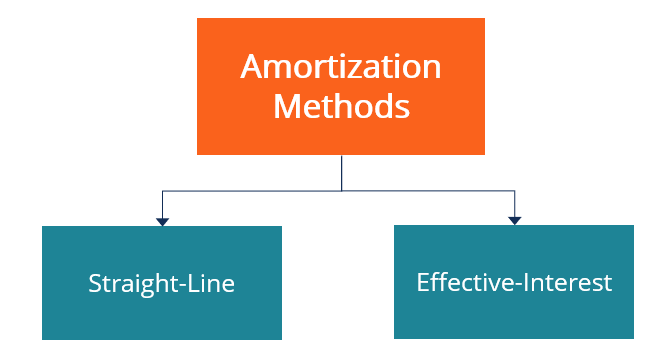
- There are two methods through which amortization calculations are commonly performed – straight-line and effective-interest.
How an Amortized Bond Works
If the bond matures after 30 years, for example, then the bond’s face value plus the interest due is paid off in monthly installments. The bondholder essentially occupies the same type of position as a bank or other lender that extended a 30-year mortgage to a homebuyer – that is, they will receive regular payments of both principal and interest over the life of the bond, just as a mortgage lender LenderA lender is defined as a business or financial institution that extends credit to companies and individuals, with the expectation that the full amount ofreceives regular payments over the term of a mortgage loan.
In most cases, the calculation for payments on an amortized bond is completed in such a way that each payment is the same amount. The only difference is the composition of the payment – the percentage of the payment going towards interest and the percentage of the payment going towards the principal varies, with more of the payment going towards interest early on and more going toward the principal as the bond gets closer to its maturation date.
Benefits of Amortized Bonds
A bond is a limited-life intangible assetIntangible AssetsAccording to the IFRS, intangible assets are identifiable, non-monetary assets without physical substance. Like all assets, intangible assets. Amortizing a bond can be significantly beneficial for a company because the business can gradually cut down the bond’s cost value.
Accountants are able to respond to a bond as if it were an amortized asset. It essentially means that the entity issuing the bond gets to document the bond discount like an asset for the entirety of the bond’s life. It can only happen if the bond’s issuer is selling the bond at a discount, meaning the issuer lets the buyer purchase the bond for less than par, or face value.
Amortization is ultimately an accounting tactic that benefits an issuer when it comes time to filing taxes. An amortized bond’s discount is listed as a portion of the issuer’s interest expenses on its income statement. Interest expenses are non-operating costs and are crucial in helping a business to cut down on its earnings before tax (EBT)Earnings Before Tax (EBT)Earnings before tax, or pre-tax income, is the last subtotal found in the income statement before the net income line item. EBT is found expenses.
Methods of Amortization: Straight-Line vs. Effective-Interest
The two most commonly used methods of amortization are :
1. Straight-Line: The simplest of the two amortization methods, the straight-line option results in bond discount amortization values, which are equal throughout the life of the bond.
2. Effective-Interest: The effective-interest method calculates different amortization amounts that must be applied to each interest expenditure per calculation period.
Example of Bond Amortization
For our example, let’s use a fixed-rate, 30-year mortgage, as it is one of the most common examples of amortization in action.
Assume that:
- The value of the mortgage is $200,000.
- There is a 5% fixed interest rate on the mortgage loan.
With the figures given above, the monthly payments are $1,073.64, which works out to be $12,883.68 per year. The majority of the payments early on are going toward interest. After the first year, even though payments total over $12,000, about $3,000 of the principal’s been paid off. By the end of the first year of payments, more than $197,000 of the loan’s principal amount remains.
Skip ahead a few years. At the end of your fifth year of payments, the monthly payment figure remains the same. However, the borrower’s paid off $16,342.54 of the principal balance. Still not much toward a total principal loan balance of $200,000 but making some progress in retiring the debt.
By the time the loan is preparing to reach maturity (around year 28 or 29), the majority of the yearly payments will go toward reducing the remaining principal. By the 29th year, roughly $11,000 of the annual payments of $12,883 are now going toward the principal rather than merely paying interest on the loan.
The best way to calculate an amortization schedule and amounts is to use an amortization calculator. These are widely available online and free to use from websites, such as Bankrate.
More Resources
CFI is the official provider of the global Commercial Banking & Credit Analyst (CBCA)™Program Page - CBCAGet CFI's CBCA™ certification and become a Commercial Banking & Credit Analyst. Enroll and advance your career with our certification programs and courses. certification program, designed to help anyone become a world-class financial analyst. To keep advancing your career, the additional CFI resources below will be useful:
- Corporate Bond ValuationCorporate Bond ValuationCorporate bond valuation is the process of determining a corporate bond’s fair value based on the present value of the bond’s coupon payments and the
- Interest ExpenseInterest ExpenseInterest expense arises out of a company that finances through debt or capital leases. Interest is found in the income statement, but can also
- Cost of DebtCost of DebtThe cost of debt is the return that a company provides to its debtholders and creditors. Cost of debt is used in WACC calculations for valuation analysis.
- Term to MaturityTerm to MaturityTerm to maturity is the remaining life of a bond or other type of debt instrument. The duration ranges between the time when the bond is issued until its
-

Understanding Call Prices: Callable Bonds & Preferred Stocks
A call price refers to the price that a preferred stock or bond issuer would pay to buyers if they chose to redeem the callable security before the maturity date. The price is set during the issuance
-
Understanding Call Protection in Bonds: Investor Protection Explained
Call protection refers to protection from investment risk to bond investors that exists by limiting the conditions under which a bond issuer may elect to call, i.e., redeem bonds before a bond’s
invest
- Personal Bond Explained: Release from Jail Without Bail
- Understanding Bond Duration: A Key Fixed Income Metric
- Coupon Bonds: Understanding Fixed Income & Interest Payments
- Discount Bonds: Understanding Pricing & Secondary Markets
- Understanding Noncallable Securities: A Comprehensive Guide
- Samurai Bonds: A Guide to Understanding Yen-Denominated Corporate Debt
- Treasury Bonds: A Comprehensive Guide to U.S. Government Debt
- Zero-Coupon Bonds: Definition, How They Work & Examples
- Understanding Bonds: A Comprehensive Guide for Investors
-
 Bullet Bond Portfolios: A Comprehensive Guide
A bullet bond portfolio, commonly referred to as a bullet portfolio, is made up of a range of bullet bonds, from short-term to long-term bullet bonds. A bullet bond is a non-callable bondNon-Callable ...
-
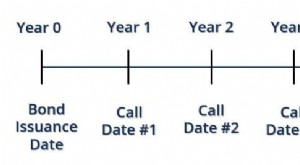 Understanding Call Dates: What You Need to Know
A call date refers to the date when a callable bondCallable BondA callable bond (redeemable bond) is a type of bond that provides the issuer of the bond with the right, but not the obligation, to rede...